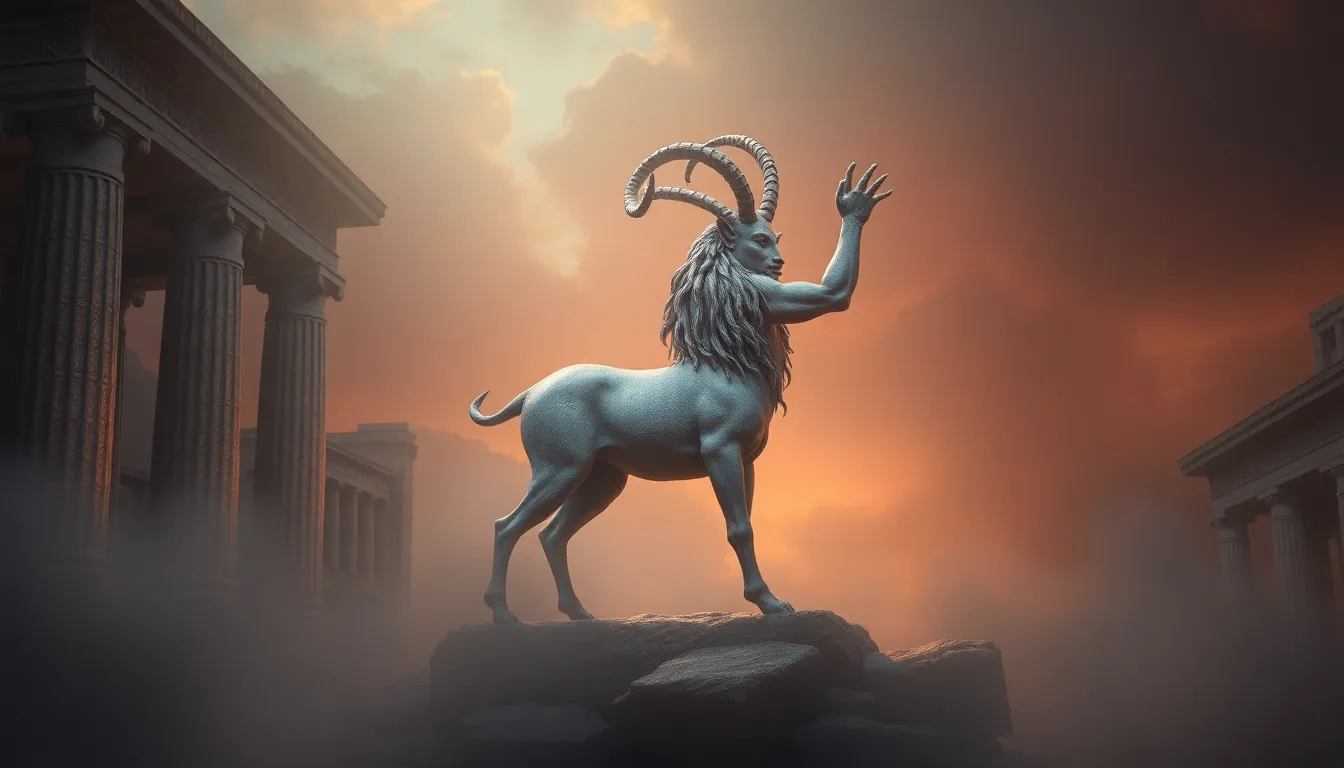
The Satyr’s Place in the Modern Understanding of Mythology
I. Introduction
Satyrs are fascinating creatures from ancient Greek mythology, often depicted as half-human and half-goat beings associated with nature, revelry, and the untamed aspects of existence. They embody hedonistic traits and a strong connection to the wilderness, making them significant figures in the pantheon of mythological beings.
This article aims to explore the historical and contemporary significance of Satyrs, examining their evolution in mythology and their relevance in modern cultural contexts. By understanding Satyrs better, we can appreciate their role in mythology and their impact on literature, art, and society.
The study of mythology has evolved significantly over the years, shifting from purely historical analysis to a more nuanced understanding that incorporates psychological, sociocultural, and ecological perspectives. This article will engage with these perspectives to provide a comprehensive overview of the Satyr archetype.
II. Historical Background of Satyrs
Satyrs have their origins in ancient Greek mythology, where they were often depicted as companions of Dionysus, the god of wine, fertility, and festivity. Their presence in mythological stories often accompanied themes of chaos and ecstasy.
Characteristics associated with Satyrs include:
- Human-like torso and face with goat-like features such as horns and legs.
- A penchant for music, dance, and revelry.
- Strong connections to nature and the wild, often depicted in forests and meadows.
In ancient literature, Satyrs appear in works by authors such as Homer and Hesiod, and they are frequently represented in Greek art, including pottery and sculpture. Their playful and sometimes mischievous nature made them a popular subject in various artistic expressions.
III. The Satyr Archetype and Its Evolution
As time progressed, the depiction of Satyrs evolved significantly. In the transition from ancient to modern portrayals, Satyrs began to take on new meanings and characteristics, influenced by cultural changes.
Influence on later mythological figures is evident in various traditions. For instance:
- Pan, the Greek god of the wild, shares many attributes with Satyrs, including their physical features and affinity for nature.
- Fauns in Roman mythology, often depicted similarly to Satyrs, reflect the blending of cultural narratives.
The Romanticism and Enlightenment periods further altered Satyr imagery, as artists and writers began to explore themes of nature, freedom, and the subconscious. This reimagining contributed to a deeper psychological understanding of these figures.
IV. Satyrs in Contemporary Culture
Today, Satyrs continue to be represented in various forms of contemporary culture. Their presence can be felt in:
- Modern literature and film: Satyr-like characters often appear in fantasy genres, representing the wild and untamed aspects of human nature.
- Popular media and video games: Satyrs are featured as playable characters or antagonists, often embodying chaos or mischief.
- Contemporary art and performance: Artists utilize the Satyr figure to explore themes of duality, nature, and the subconscious.
These modern representations showcase the enduring appeal of Satyrs and their adaptability to new cultural narratives.
V. Psychological and Sociocultural Interpretations
Analyzing Satyrs through psychological lenses, such as Jungian archetypes, reveals their significance as symbols of the shadow self. They represent aspects of humanity that are often suppressed or ignored, such as desires and instincts.
Satyrs can be viewed as embodiments of hedonism and the human condition, reflecting the tension between civilization and nature, order and chaos. Their revelry can symbolize the primal urges that exist within all individuals.
Furthermore, discussions of gender and sexuality often intersect with the Satyr archetype, as they challenge conventional norms and explore themes of freedom and excess. This complexity adds layers to their relevance in contemporary discussions.
VI. Satyrs and Environmental Symbolism
Satyrs are intrinsically linked to nature in mythology, often depicted as guardians of the wilderness. This connection has profound implications in modern ecological narratives.
In contemporary interpretations, Satyrs can be seen as environmental figures, representing the need for harmony between humanity and the natural world. Their revelry in nature serves as a reminder of the beauty and chaos of the environment.
Moreover, the role of Satyrs in ecological discussions highlights the importance of preserving the wild spaces they represent, urging society to reconsider its relationship with nature.
VII. The Satyr in Comparative Mythology
When examining Satyrs in comparative mythology, similarities arise with figures in other cultures. For example:
- Pan: The Greek god of the wild, often depicted similarly to Satyrs.
- Fauns: Roman counterparts of Satyrs, sharing their characteristics and symbolism.
- Various nature spirits: Found in numerous cultures, these beings echo the traits of Satyrs.
Cross-cultural analyses of Satyr-like beings reveal universal themes of nature, chaos, and the human experience, offering valuable lessons in understanding humanity’s relationship with the wild.
VIII. Conclusion
The significance of Satyrs in modern mythology cannot be overstated. They embody the complexities of human nature, the wildness inherent in all of us, and the interplay between civilization and the natural world.
As cultural narratives continue to evolve, the Satyr archetype remains relevant and adaptable, reflecting contemporary societal themes. Future research and exploration of Satyrs in mythology can yield further insights into their enduring appeal and significance across cultures.