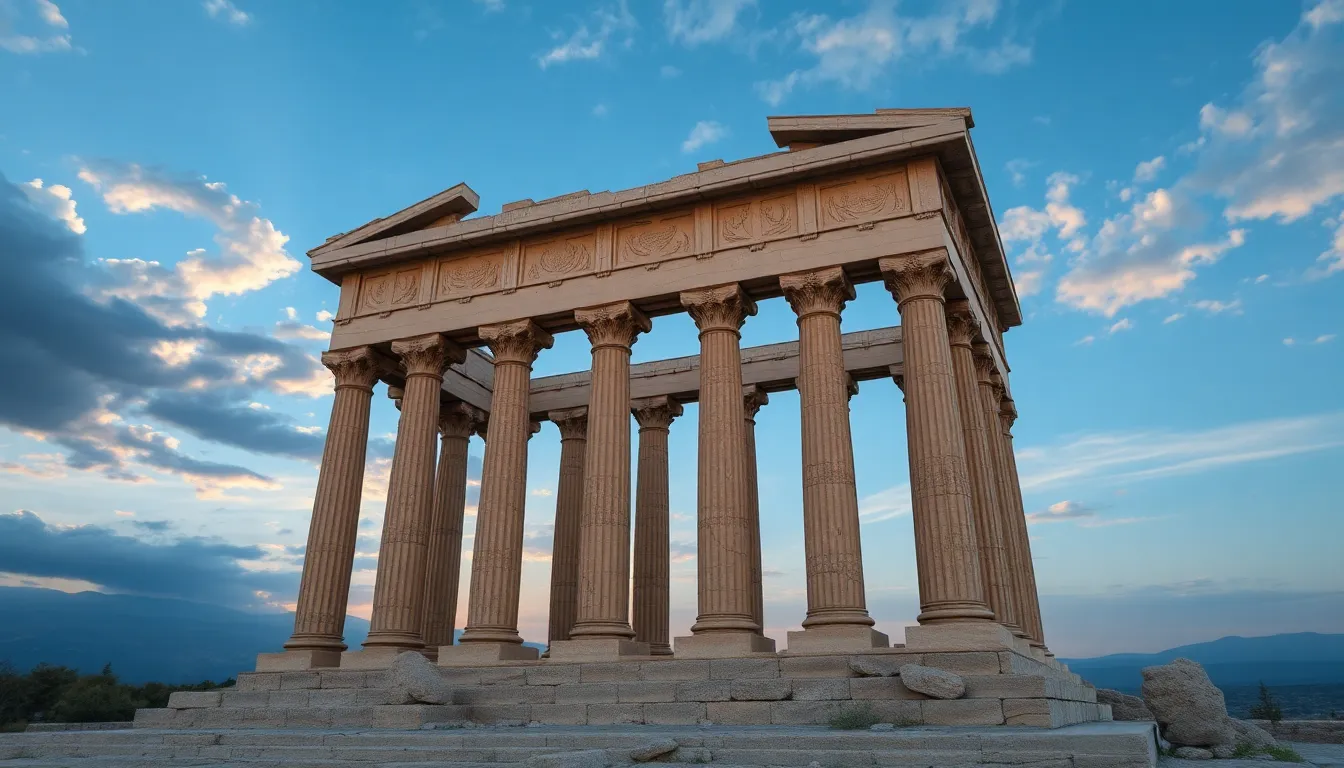
The Temples of the Gods: A Journey into Ancient Greek Spirituality
I. Introduction to Ancient Greek Spirituality
Ancient Greek spirituality was a rich tapestry of beliefs, rituals, and practices centered around a pantheon of gods and goddesses. Greek polytheism, characterized by the worship of multiple deities, was integral to the daily lives of the ancient Greeks. Each god and goddess held dominion over various aspects of life, from agriculture to war, and their influence was reflected in every facet of society.
Temples played a crucial role in this spiritual landscape. They were not merely places of worship but were also centers of community life, political activity, and artistic expression. This article aims to explore the significance of temples in ancient Greek spirituality, examining their historical evolution, architectural features, rituals, and their lasting impact on modern culture.
II. Historical Context of Greek Temples
The architecture of Greek temples evolved significantly over the centuries, mirroring changes in society, politics, and religious practices. The development of temple architecture can be categorized into key historical periods:
- Archaic Period (c. 800-500 BCE): The earliest temples were simple structures, often made of wood. The transition to stone began during this period, leading to the development of distinct architectural styles.
- Classical Period (c. 500-323 BCE): This era witnessed the peak of temple construction, with monumental structures such as the Parthenon being erected. The architectural styles became more refined, showcasing advanced engineering and aesthetic principles.
- Hellenistic Period (c. 323-31 BCE): Following the conquests of Alexander the Great, temple architecture became more elaborate and decorative, reflecting the cosmopolitan nature of the period.
Geography and politics also played significant roles in temple construction. Temples were often built in locations deemed sacred or strategic, such as atop hills or near important trade routes. The political power of city-states influenced which temples were constructed and dedicated to specific deities, reinforcing the connection between spirituality and governance.
III. Major Temples and Their Deities
Several temples stand out in the landscape of ancient Greek spirituality, each dedicated to a specific deity and serving as a focal point for worship and community activities. Some of the most significant include:
A. The Parthenon and Athena
The Parthenon, located on the Acropolis of Athens, is perhaps the most iconic temple of ancient Greece. Dedicated to Athena, the goddess of wisdom and warfare, it was constructed during the height of the Athenian Empire in the 5th century BCE. The temple served as a symbol of Athenian power and cultural achievement.
B. The Temple of Zeus at Olympia
The Temple of Zeus at Olympia was dedicated to the king of the gods, Zeus. Completed in the 5th century BCE, it housed the immense statue of Zeus, one of the Seven Wonders of the Ancient World. The temple was a central site for the Olympic Games, held in honor of Zeus.
C. The Temple of Apollo at Delphi
The Temple of Apollo at Delphi was renowned as the site of the Delphic Oracle, where priestesses known as Pythia would deliver prophecies. Dedicated to Apollo, the god of prophecy and music, the temple attracted visitors from all over the Greek world, seeking guidance and insight.
D. Lesser-known temples and their significance
While the major temples are often highlighted, many lesser-known temples held local significance and were vital to their communities:
- The Temple of Artemis at Ephesus: One of the largest temples of the ancient world, dedicated to the goddess Artemis, it was a major pilgrimage site.
- The Temple of Asclepius at Epidaurus: Dedicated to the god of healing, Asclepius, this temple was part of a larger sanctuary that included a theater and was a center for medical care.
IV. Architectural Features and Symbolism
The architectural styles of Greek temples are categorized primarily into three orders: Doric, Ionic, and Corinthian. Each style possesses distinct characteristics:
- Doric: The simplest and oldest style, characterized by sturdy columns with no base and a fluted shaft. The Doric order is often associated with masculine strength.
- Ionic: Recognized by its more slender columns and scroll-like volutes at the capital. The Ionic style is seen as more feminine and delicate.
- Corinthian: The most ornate of the three, featuring a slender column and elaborate acanthus leaves at the capital. This style became popular in the Hellenistic period.
Symbolism is deeply embedded in temple design. The orientation of temples often aligned with celestial bodies, and their facades were adorned with sculptures and friezes depicting myths and heroic deeds, serving both decorative and didactic purposes.
V. Rituals and Practices at the Temples
Rituals and practices at Greek temples were integral to the worship of the gods. Daily worship involved offering sacrifices, prayers, and libations. The significance of festivals cannot be understated, as they were occasions for communal celebration and religious expression.
For example, the Panathenaea was a major festival held in Athens to honor Athena, featuring athletic competitions, processions, and cultural events. The role of priests and priestesses was crucial in conducting rituals, interpreting divine messages, and maintaining the sanctity of the temple.
VI. Temples as Centers of Community Life
Beyond their religious functions, temples served as vital centers of community life. They were often the focal point of social gatherings, political discourse, and economic activities.
Temples played a significant role in the local economy, attracting pilgrims and tourists, which stimulated trade and commerce. The wealth generated through offerings and dedications contributed to the prosperity of the surrounding community.
Moreover, temples facilitated the spread of cultural ideas, acting as venues for artistic performances, philosophical discussions, and educational activities, thus shaping the cultural landscape of ancient Greece.
VII. The Decline of Temple Worship
The rise of Christianity marked a significant turning point in the history of temple worship. As Christianity became the dominant religion in the Roman Empire, many temples were repurposed, destroyed, or fell into disrepair. The shift in religious practices led to a decline in the traditional worship of the Greek gods.
Additionally, during the Roman Empire, the integration of Greek and Roman deities further complicated the landscape of worship. Many temples that had once served as centers of Greek spirituality were adapted for the new religious context.
Today, the ruins of ancient temples stand as a testament to their grandeur and the rich spiritual heritage of Greece. Preservation efforts are crucial to maintaining these historical sites for future generations.
VIII. Conclusion: The Enduring Legacy of Greek Temples
The legacy of Greek temples continues to resonate in modern culture. They serve as symbols of ancient spirituality, architectural innovation, and artistic achievement. The fascination with Greek mythology and its themes of heroism, tragedy, and divinity endures in literature, art, and popular culture.
As we explore and preserve these historical sites, we not only honor the beliefs and practices of our ancestors but also ensure that the rich tapestry of ancient Greek spirituality remains accessible to future generations. The temples of the gods stand as enduring monuments to the complexity and beauty of human belief and creativity.