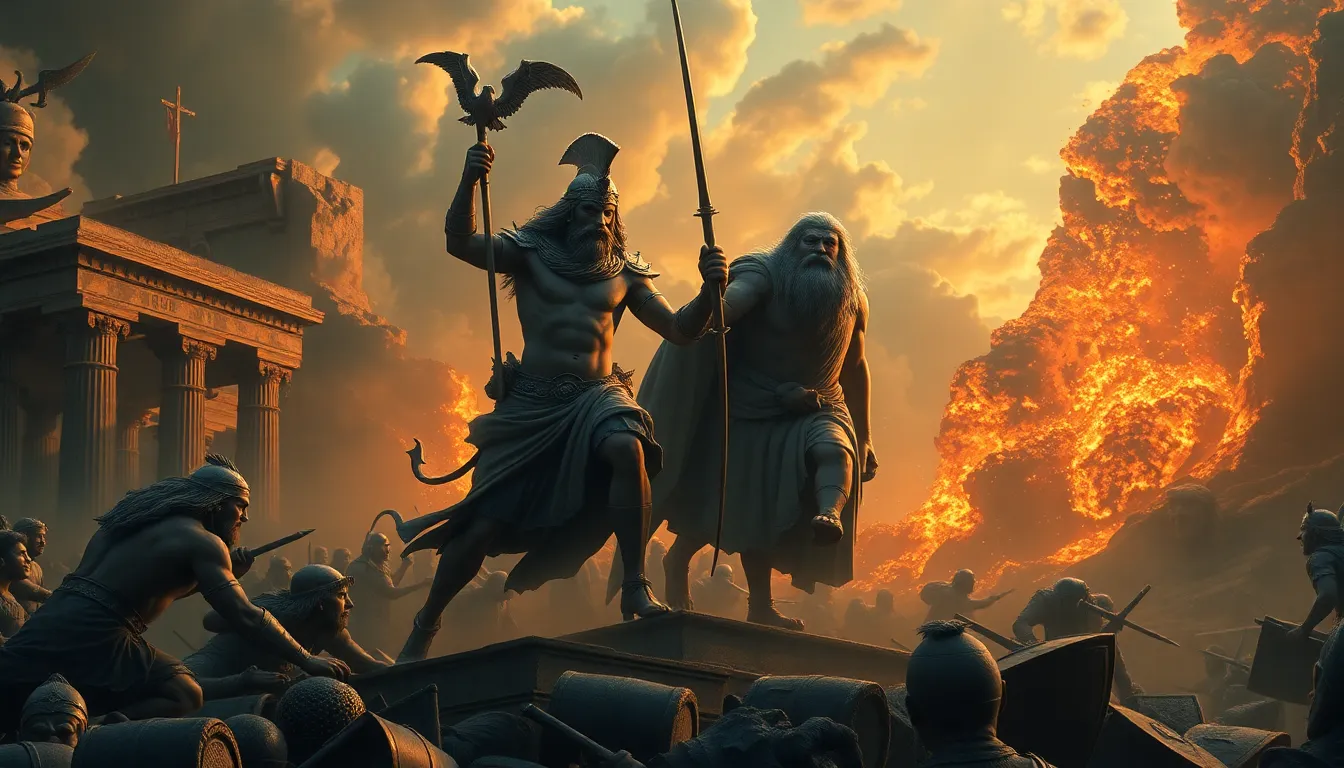
The Titanomachy: A Battle of Legends and Myths in Ancient Greece
I. Introduction to the Titanomachy
The Titanomachy, a monumental conflict in Greek mythology, represents the epic battle between the Titans and the Olympian gods. This war is not just a mere clash of deities; it signifies the transition from an ancient order to a new regime that would shape the course of Greek mythology and culture.
In the rich tapestry of Greek myths, the Titanomachy serves as a pivotal narrative that underscores themes of power, rebellion, and the cyclical nature of authority. It is within this context that we explore the significance of this epic tale within ancient Greek culture, where the stories of gods and titans were intertwined with the values and beliefs of the society.
II. The Titans: Origins and Characteristics
The Titans, primordial deities in Greek mythology, are often depicted as gigantic and powerful beings who preceded the Olympian gods. They are the children of Uranus (the sky) and Gaia (the earth) and represent various aspects of the natural world.
- Cronus: The leader of the Titans, known for his cunning and ruthlessness.
- Rhea: The sister and wife of Cronus, associated with fertility and motherhood.
- Oceanus: The Titan god of the ocean, embodying the vastness of the sea.
- Tethys: The Titaness of the nourishing flow of water, wife of Oceanus.
- Hyperion: The Titan of light, representing the sun.
- Theia: The Titaness of sight and the shining sky, mother of Helios, Selene, and Eos.
The Titans played a crucial role in the creation of the world, with their lineage and actions setting the stage for the eventual rise of the Olympians. Their dominion over the cosmos, however, would come to an end as new gods emerged to challenge their rule.
III. The Olympian Gods: Rise of a New Order
The Olympians, a new generation of gods, were born from the union of Cronus and Rhea. This divine family represented a shift in power, characterized by their youthful vigor and ambitions for supremacy.
- Zeus: The youngest son of Cronus and Rhea, destined to become the king of the gods.
- Hera: Zeus’s sister and wife, goddess of marriage and family.
- Poseidon: The god of the sea, known for his temperamental nature and powerful trident.
- Demeter: The goddess of agriculture, sister to Zeus, representing the fertility of the earth.
- Hestia: The goddess of the hearth and home, another sister of Zeus.
The motivations behind the Olympians’ rebellion against the Titans stemmed from a prophecy that foretold the downfall of Cronus at the hands of one of his children. This fear led Cronus to devour his offspring, but Rhea managed to save Zeus, setting the stage for the eventual conflict.

IV. The Prelude to the Titanomachy
The historical and mythological background leading to the Titanomachy is steeped in intrigue and foreshadowing. The prophecy regarding Cronus was a significant catalyst, as it highlighted the fear and paranoia that plagued the Titan leader.
Key events that set the stage for the battle include:
- Rhea’s successful concealment of Zeus, who was raised in secret.
- Zeus’s return to confront Cronus, leading to the liberation of his swallowed siblings.
- The gathering of allies, including the Cyclopes and Hecatoncheires, who would play crucial roles in the ensuing conflict.
V. The Great Battle: Key Events and Strategies
The Titanomachy itself was a vast and chaotic battle that spanned ten years. The battlefield was said to be Mount Olympus, where the forces of the Titans clashed with those of the Olympians.
Key events and strategies during the Titanomachy included:
- Zeus’s Leadership: Zeus led the Olympians with strategy and valor, utilizing thunderbolts crafted by the Cyclopes as powerful weapons against the Titans.
- Hecatoncheires: These hundred-handed giants fought valiantly for the Olympians, using their immense strength to overwhelm the Titans.
- Notable Confrontations: Many individual battles occurred, with gods and titans facing off, showcasing their unique powers and abilities.
The Titanomachy culminated in a decisive victory for the Olympians, marking the end of Titan rule and the dawn of a new era in Greek mythology.
VI. Aftermath and Consequences of the Titanomachy
The aftermath of the Titanomachy saw the Titans defeated and imprisoned in Tartarus, a deep abyss used as a dungeon of torment. This not only marked their fall from power but also solidified the Olympians’ dominance over the cosmos.
The establishment of Olympian rule had far-reaching implications:
- The Olympians became the principal deities worshipped in ancient Greece, shaping religious practices and beliefs.
- The mythological narratives evolved, focusing on the adventures and conflicts of the Olympians.
- The balance of power shifted, emphasizing themes of justice, order, and the consequences of tyranny.
Culturally, the victory of the Olympians over the Titans became a symbol of triumph over chaos and disorder, resonating deeply within Greek society.
VII. Interpretations and Symbolism of the Titanomachy
The Titanomachy can be interpreted through various lenses, revealing themes of power, authority, and generational conflict. It reflects the struggle between the old and the new, embodying the cyclical nature of power dynamics.
Some key interpretations include:
- Power and Authority: The conflict illustrates the transition from one form of governance (the Titans) to another (the Olympians), highlighting the challenges inherent in leadership.
- Generational Conflict: The rebellion of the Olympians against their father symbolizes the inherent tensions between generations, a theme prevalent in human history.
- Chaos and Order: The Titanomachy represents the struggle to impose order upon chaos, a narrative that resonates with societal values in ancient Greece.
VIII. Conclusion: The Legacy of the Titanomachy in Modern Culture
The Titanomachy has left an indelible mark on literature, art, and modern storytelling. Its themes of conflict and power continue to resonate, influencing countless works across cultures and time periods.
In contemporary society, the Titanomachy serves as a metaphor for various struggles, reflecting the ongoing human experience with authority, rebellion, and the quest for justice. Its enduring legacy prompts us to consider the complexities of human nature and the conflicts that shape our world.
Ultimately, the Titanomachy is not just a tale of gods and titans but a profound exploration of the dynamics that govern our existence, reminding us of the timeless nature of conflict and the search for order amidst chaos.