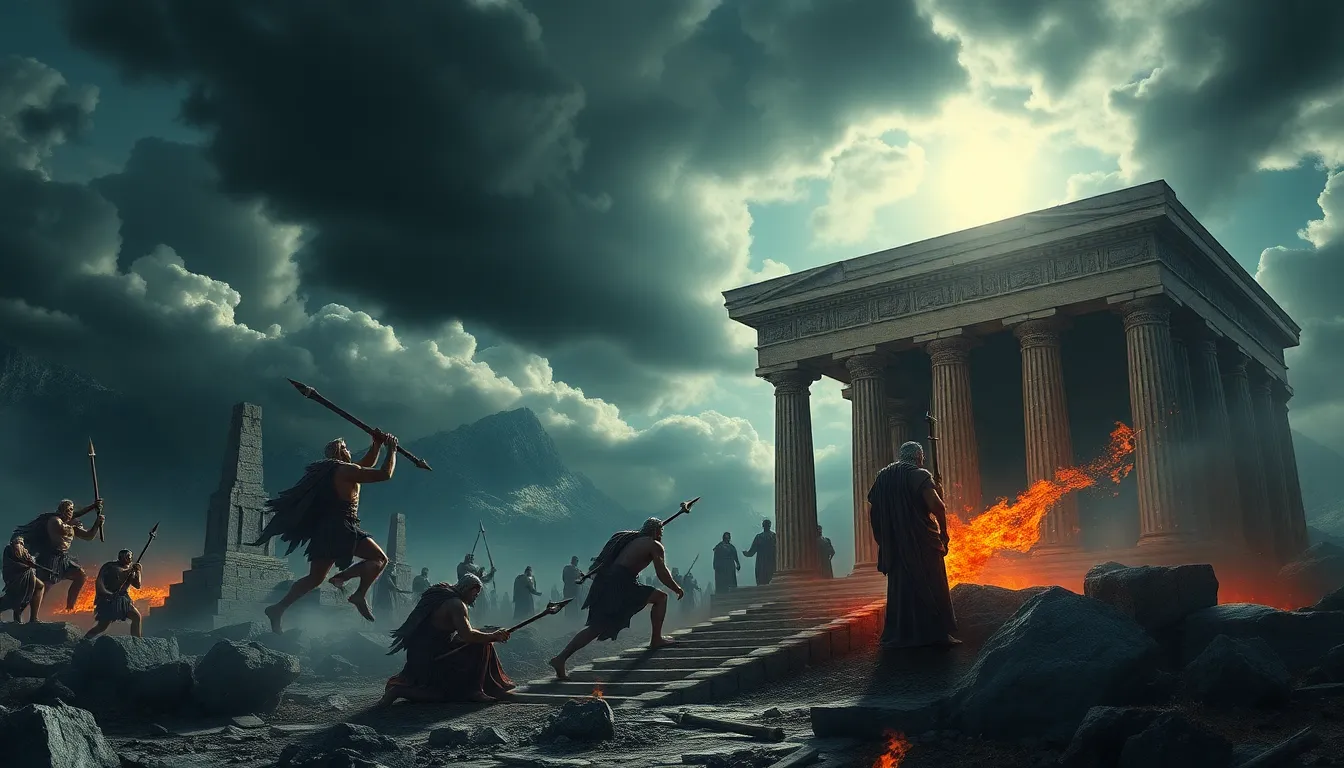
The Titanomachy: The Myths of the War Between Titans and Gods
I. Introduction
The Titanomachy, a pivotal event in Greek mythology, refers to the legendary war between the Titans—an ancient race of powerful deities—and the Olympian gods, led by Zeus. This epic conflict symbolizes the struggle for supremacy, control, and the natural order of the cosmos. The Titanomachy not only marks a significant transition in divine power but also serves as a foundational myth that shapes the narratives of Greek culture and literature.
In this article, we will explore the origins of the Titans and Olympian gods, delve into the causes and key events of the Titanomachy, highlight notable figures involved in the conflict, and examine the aftermath and cultural legacy of this monumental war.
II. The Origins of the Titans and the Olympian Gods
A. The creation of the cosmos and the primordial beings
The Greek cosmos began with Chaos, a primordial void. From Chaos emerged Gaea (Earth), Tartarus (the Abyss), Eros (Love), and Erebus (Darkness). Gaea gave birth to the first generation of deities, including the Titans, who were powerful entities that personified various aspects of the world.

B. The emergence of the Titans: Key figures and their roles
- Cronus: The leader of the Titans, known for his ruthless reign.
- Rhea: Sister and wife of Cronus, goddess of fertility and motherhood.
- Oceanus: Titan of the ocean, representing the vastness of water.
- Hyperion: Titan of light and observation, father of the sun, moon, and dawn.
- Themis: Titaness of divine law and order.
C. The rise of the Olympian gods: Zeus and his siblings
As the Titans ruled, a new generation began to emerge. Among them were the Olympian gods, children of Cronus and Rhea. Zeus, the youngest, would ultimately become the chief deity, spearheading the revolt against the Titans. His siblings included:
- Hestia: Goddess of the hearth and domesticity.
- Hera: Queen of the gods and goddess of marriage and family.
- Poseidon: God of the sea and earthquakes.
- Hades: God of the underworld.
III. The Causes of the Titanomachy
A. The prophecy of the overthrow of Cronus
The seeds of conflict were sown with a prophecy foretold to Cronus. It was said that he would be overthrown by one of his own children, prompting him to swallow each of his offspring at birth. However, Rhea saved Zeus by hiding him in a cave on Mount Ida and giving Cronus a stone wrapped in swaddling clothes instead.
B. The conflict between generations: Titans vs. Olympians
The struggle between the Titans and the Olympians represents a fundamental generational conflict, where the old order must give way to the new. This rebellion is a central theme in many myths, showcasing the cycle of power and rebellion.
C. Key motivations driving the war
Several motivations fueled the Titanomachy, including:
- Desire for control over the cosmos and its inhabitants.
- The instinct to protect the younger generation (the Olympians) from the tyrannical rule of Cronus.
- Divine prophecies that foretold the rise of new rulers.
IV. Major Events of the Titanomachy
A. The formation of alliances: Titans versus Olympians
The war was marked by shifting alliances and strategies. Zeus, after gaining support from his siblings, sought allies among other deities:
- Prometheus and Epimetheus, who sided with the Olympians.
- The Cyclopes and Hecatoncheires, powerful beings imprisoned by the Titans, who were freed by Zeus.
B. Key battles and strategies employed during the war
The Titanomachy lasted for a decade, characterized by numerous battles and sieges. Key strategies included:
- Use of the Cyclopes’ gifts to the Olympians: Zeus received his thunderbolts, Poseidon his trident, and Hades his helmet of invisibility.
- Employing deception and cunning to gain advantages in battle.
C. The role of Gaia and other deities in the conflict
Gaia played a critical role in the conflict, initially supporting the Titans but later aiding the Olympians. Discontent with Cronus’s rule led her to shift allegiance, as she desired to see her grandchildren—the Olympians—triumph.
V. Key Figures in the Titanomachy
A. Cronus: The leader of the Titans
Cronus, representing the old order, was a formidable adversary. His actions, driven by fear of losing power, ultimately led to his downfall.
B. Zeus: The champion of the Olympians
Zeus emerged as a heroic figure, symbolizing hope and change. His leadership galvanized the Olympians and transformed the course of the battle.
C. Other notable Titans and Olympians involved in the war
- Atlas: A Titan condemned to hold up the sky.
- Prometheus: A Titan known for his cleverness and for stealing fire for humanity.
- Hera: Fiercely loyal to Zeus, she played a strategic role in the war.
VI. The Aftermath of the Titanomachy
A. The defeat of the Titans and their consequences
The Titanomachy concluded with the decisive victory of the Olympians. The Titans were defeated and imprisoned, marking the end of their reign.
B. The establishment of the Olympian rule
Following their victory, the Olympian gods established a new order, with Zeus as the supreme ruler. This era is often referred to as the Golden Age of the Olympians, during which they governed with a focus on justice and balance.
C. The fate of the Titans: Imprisonment in Tartarus
The defeated Titans were cast into Tartarus, a deep abyss used as a dungeon of torment. This punishment served as a warning to any who would challenge the Olympian order in the future.
VII. Cultural Impact and Legacy of the Titanomachy
A. The Titanomachy in ancient Greek literature and art
The Titanomachy has been a rich source of inspiration in ancient literature and art. It appears in works by Hesiod, particularly in “Theogony,” which details the genealogy of the gods and the events of the war.
B. Influence on later myths and storytelling
Many later myths and stories draw upon the themes and characters of the Titanomachy. It set the stage for conflicts among gods and heroes in subsequent Greek mythology, influencing works by playwrights and poets.
C. Modern interpretations and adaptations of the Titanomachy
In contemporary culture, the Titanomachy has been reinterpreted in various forms, from literature to films and video games. The themes of power struggles and generational conflict resonate with modern audiences, ensuring the Titanomachy remains relevant.
VIII. Conclusion
The Titanomachy stands as a central narrative in Greek mythology, encapsulating themes of power, rebellion, and the establishment of a new order. It reflects the complexities of familial relationships and the inevitable cycle of conflict that defines not just the divine but human experience as well.
As we explore the rich tapestry of myths surrounding the Titanomachy, we are reminded of the enduring fascination with these ancient stories. They offer insights into the human condition and our understanding of power and legacy, making them timeless tales that continue to inspire and intrigue.