The Titanomachy: A Comprehensive Guide to the Legendary War
I. Introduction to the Titanomachy
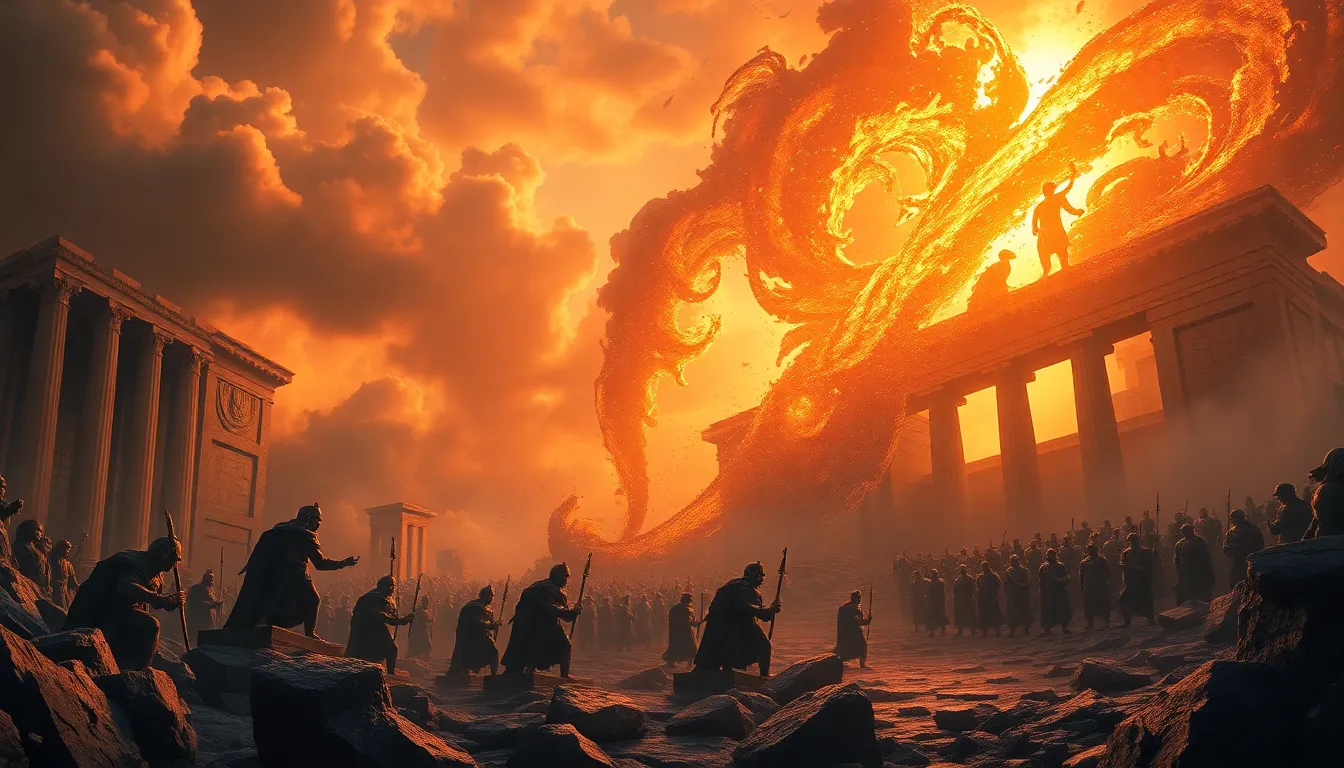
The Titanomachy is a pivotal conflict in Greek mythology, representing the epic struggle between the Titans, the older generation of gods, and the Olympians, led by Zeus. This war is not merely a battle for power; it symbolizes the transition from one era of divine rule to another, marking the rise of a new pantheon in the mythological landscape of ancient Greece.
The significance of the Titanomachy extends beyond its narrative; it laid the groundwork for many subsequent myths and literary works. The themes of power, rebellion, and the cyclical nature of generations resonate throughout Greek mythology, influencing countless stories and artistic representations over the centuries.
II. The Titans: Who Were They?
The Titans were a group of powerful deities that predated the Olympian gods. They were primarily the descendants of Uranus (the sky) and Gaia (the earth). Known for their immense strength and their dominion over various aspects of the cosmos, the Titans played a crucial role in the early formation of the world.
A. Description of the Titans and their origins
The Titans were often characterized by their vastness and primordial nature. As the first divine beings, they were associated with fundamental aspects of the universe, such as time, ocean, and fertility. Their reign was marked by order but also by tyranny, as evidenced by Cronus’s fear of being overthrown by his offspring.
B. Key figures among the Titans
- Cronus: The leader of the Titans, known for his ruthless rule and the prophecy that he would be overthrown by his children.
- Rhea: Cronus’s sister and wife, who played a crucial role in saving their youngest child, Zeus.
- Oceanus: The Titan of the ocean, representing the vast, unbounded waters that encircle the earth.
C. The role of the Titans in early Greek cosmology
The Titans were seen as the architects of the universe, with each Titan embodying a specific element or force of nature. They governed the earth and its natural phenomena before the rise of the Olympians, who would eventually reshape the world according to their own ideals and power structures.
III. The Olympians: Rise of the New Generation
The Olympians represent the new generation of gods that emerged from the ashes of the Titanomachy. Led by Zeus, they symbolized a shift in divine authority and responsibility.
A. Introduction to the Olympian gods
The Olympian gods were characterized by their more relatable and human-like qualities compared to the Titans. They governed various aspects of life and nature, establishing a new order that emphasized justice, morality, and individual agency.
B. Key figures of the Olympians
- Zeus: The king of the gods, associated with the sky, lightning, and thunder.
- Hera: The queen of the gods and goddess of marriage and family.
- Poseidon: The god of the sea, earthquakes, and horses.
C. The birth of Zeus and the gathering of allies
Zeus was the youngest child of Cronus and Rhea. To prevent Cronus from swallowing him like his siblings, Rhea hid Zeus on the island of Crete, where he was raised by nymphs. Upon reaching adulthood, Zeus returned to confront his father, leading to the liberation of his siblings and the gathering of powerful allies such as the Cyclopes and Hecatoncheires, who would play crucial roles in the Titanomachy.
IV. The Causes of the Titanomachy
The Titanomachy was ignited by a combination of fear, betrayal, and the inherent conflict within the Titan family. Cronus’s paranoia about losing his power set the stage for an inevitable clash.
A. Cronus’s fear of losing power and prophecy
According to prophecy, Cronus was destined to be overthrown by one of his children. To prevent this, he resorted to swallowing each of his offspring immediately after birth. This act of desperation fueled the resentment that would culminate in the Titanomachy.
B. The role of betrayal and familial conflict
Rhea’s betrayal of Cronus by saving Zeus played a pivotal role in the conflict. This act of defiance against Cronus’s tyranny not only sparked the war but also highlighted the themes of familial loyalty and rebellion.
C. The significance of the Titan’s rule over the cosmos
The Titans’ rule represented a time of dominance and control over the universe, with their defeat symbolizing the end of an era. This shift was not only a change in leadership but also a transformation in the way the cosmos was perceived and governed.
V. The Course of the War
The Titanomachy was marked by intense battles and strategic maneuvers as the Titans and Olympians clashed for supremacy.
A. Initial battles and strategies employed by both sides
Both sides engaged in fierce combat, with the Titans relying on their brute strength and the Olympians utilizing their cunning and the support of allies. The Olympians initially faced setbacks, but their resolve and strategic alliances began to tip the scales.
B. Key events and turning points in the conflict
- The release of the Cyclopes and Hecatoncheires, who provided the Olympians with powerful weapons.
- The decisive battles on Mount Olympus and the plains of Phthia, where the Titans were gradually overpowered.
C. The involvement of significant allies
The Cyclopes forged Zeus’s thunderbolts, Poseidon’s trident, and Hades’s helmet of invisibility, while the Hecatoncheires fought with tremendous strength, turning the tide in favor of the Olympians.
VI. The Aftermath of the Titanomachy
The conclusion of the Titanomachy had profound implications for the cosmos and the divine hierarchy.
A. The defeat of the Titans and their fate
After a grueling ten-year war, the Titans were ultimately defeated. Most were imprisoned in Tartarus, a deep abyss used as a dungeon of torment and suffering. Their loss signified a dramatic shift in divine power.
B. The establishment of the Olympian order
With the Titans vanquished, Zeus and his siblings established a new order of gods on Mount Olympus. They created a pantheon that would govern the universe with justice and order, contrasting the chaotic rule of the Titans.
C. The lasting effects on Greek mythology and culture
The Titanomachy not only reshaped the pantheon of gods but also influenced the cultural and religious practices of ancient Greece. The Olympians became central figures in worship, mythology, and art.
VII. Interpretations and Symbolism of the Titanomachy
The Titanomachy is rich in themes and symbolism that have been interpreted in various ways throughout history.
A. Themes of power, rebellion, and generational conflict
At its core, the Titanomachy embodies the struggle for power and the inevitable conflict between generations. It reflects the tension between the old and the new, highlighting the cyclical nature of authority.
B. The Titanomachy as an allegory for natural forces and societal change
Many interpretations view the Titanomachy as a metaphor for natural disasters and the changing tides of society. The Titans represent the chaotic forces of nature, while the Olympians symbolize civilization’s order and rationality.
C. Artistic and literary representations throughout history
From ancient pottery to Renaissance paintings, the Titanomachy has inspired countless artistic representations. Literary works, such as Hesiod’s “Theogony,” provide detailed accounts of the war, emphasizing its significance in the Greek mythological canon.
VIII. Conclusion: Legacy of the Titanomachy
The Titanomachy stands as a monumental event in Greek mythology, symbolizing the eternal struggle for power and the evolution of divine authority. Its significance extends beyond ancient tales, influencing modern storytelling and popular culture in profound ways.
Today, the Titanomachy continues to resonate in various forms, from literature and film to art and philosophy. It serves as a reminder of the complexities of power dynamics and the cyclical nature of change, remaining relevant in