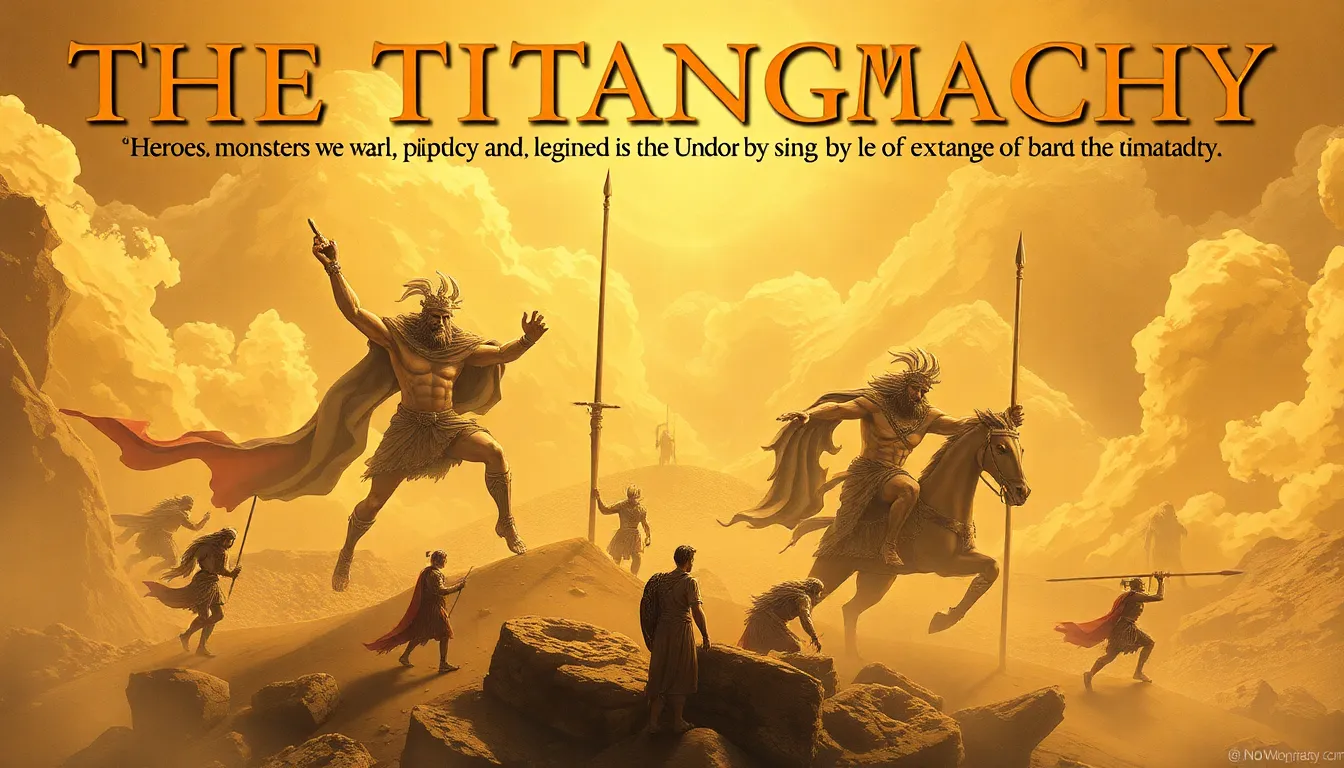
The Titanomachy: Heroes, Monsters, and Legends of the War
I. Introduction
The Titanomachy is one of the most significant events in Greek mythology, representing the epic struggle between the Titans and the Olympian gods for supremacy over the cosmos. This monumental war not only shaped the hierarchy of the divine but also influenced the lives of mortals and the very fabric of the universe in Greek belief.
In this article, we will delve into the Titanomachy, exploring its origins, key figures, and characters, as well as the monsters that roamed the battlefield. We will also highlight the aftermath of this legendary conflict and its lasting impact on culture and literature.
II. The Background of the Titanomachy
The origins of the Titanomachy are deeply rooted in the history of the cosmos, beginning with the primordial deities and the birth of the Titans. The Titans, powerful beings born from the primordial entities Gaia (Earth) and Uranus (Sky), ruled the universe before the rise of the Olympians.
A. The Origins of the Titans and Olympians
Gaia, the Earth, gave birth to Uranus, the Sky, and together they produced the Titans, who were the first pantheon of gods. However, Uranus feared his children and imprisoned them, leading to resentment and rebellion among the Titans. The youngest Titan, Cronus, eventually overthrew Uranus, becoming the ruler of the cosmos.

B. Key Figures Involved in the Conflict
As the Titan’s rule continued, they gave birth to the Olympians, who would ultimately challenge them. Among the key figures in this conflict are:
- Chronos and Gaia: The primordial deities whose offspring would shape the future of the mythological world.
- Zeus and His Siblings: Zeus, the youngest son of Cronus, along with his siblings Hestia, Hera, Demeter, Poseidon, and Hades, would rise up to challenge the Titans.
C. The Reasons for the War
The Titanomachy was ignited by a combination of ambition, prophecy, and the desire for power. A prophecy foretold that Cronus would be overthrown by one of his children, compelling him to devour them at birth. However, Rhea, Cronus’s wife, saved Zeus and raised him in secret, leading to the eventual rebellion of the Olympians.
III. The Heroes of the Titanomachy
The Titanomachy was marked by the valor and courage of its heroes, particularly the Olympians, who fought fiercely against their Titan foes.
A. Zeus: The King of the Gods
Zeus played a pivotal role in leading the Olympians against the Titans. His determination, strength, and strategic mind were crucial in the battle’s outcome.
- Role in Leading the Olympians: As the leader of the Olympian gods, Zeus rallied his siblings and allies to challenge Cronus and the Titans.
- Key Achievements During the War: Zeus wielded his thunderbolt, a powerful weapon that turned the tide of many battles and instilled fear in the hearts of the Titans.
B. Other Notable Olympian Gods
Other Olympians also played significant roles in the Titanomachy:
- Hera: Zeus’s sister and wife, she provided support and strategy during the war.
- Poseidon: The god of the sea, Poseidon used his power to create storms and earthquakes against the Titans.
- Hades: Though he ruled the Underworld, Hades contributed to the war effort and later claimed his dominion over the dead.
C. Mortal Heroes and Their Impact on the Battle
While the battle primarily involved gods, several mortal heroes played important roles, either by rallying support for the Olympians or by fighting alongside them. Their bravery and loyalty helped solidify the Olympian cause.
IV. The Monsters and Creatures of the Titanomachy
Monsters and mythical creatures also played a significant role in the Titanomachy, with both sides utilizing powerful beings in their quests for dominance.
A. The Titans as Formidable Foes
The Titans themselves were formidable adversaries, possessing immense strength and unique abilities. Some of the most notable Titans include:
- Cronus: The leader of the Titans, known for his ruthless nature and the act of swallowing his children.
- Atlas: Fated to hold up the sky for eternity, Atlas was a powerful Titan who fought valiantly against the Olympians.
B. Mythical Creatures Involved in the Conflict
Several mythical creatures were also drawn into the conflict, such as:
- The Cyclopes: These one-eyed giants were skilled craftsmen who forged Zeus’s thunderbolts and fought for the Olympians.
- Hecatoncheires: With their hundred arms and fierce strength, these creatures assisted the Olympians by launching massive boulders at the Titans.
C. Symbolism of Monsters in the Titanomachy
The presence of monsters in the Titanomachy symbolizes chaos and the struggle for order. The Olympians represented a new order, while the Titans and their monstrous allies embodied the primordial chaos that preceded it.
V. Key Battles and Turning Points
The Titanomachy was characterized by numerous battles, with each confrontation determining the fate of the cosmos.
A. Major Confrontations Between Titans and Olympians
Several key battles defined the Titanomachy, including:
- The Battle of Phlegra: A significant confrontation where the Olympians faced the Titans in a fierce clash.
- The Siege of Mount Olympus: The Titans attempted to overthrow the Olympians by attacking their stronghold, but were ultimately repelled.
B. Strategies and Tactics Employed by Both Sides
Each side employed different strategies in the war, with the Titans relying on brute strength and numbers, while the Olympians used cunning tactics and alliances to gain an advantage.
C. The Role of Prophecy and Fate in the Battles
Prophecies played a crucial role in the Titanomachy, shaping the actions of both sides. The knowledge that Cronus would be overthrown added urgency to his actions, while Zeus’s awareness of his destiny motivated him to lead the revolt.
VI. The Aftermath of the Titanomachy
The conclusion of the Titanomachy marked a significant shift in the power dynamics of the mythological world.
A. The Defeat of the Titans
After a prolonged and brutal conflict, the Olympians emerged victorious, leading to the defeat and imprisonment of the Titans in Tartarus, a deep abyss that served as a prison.
B. The Establishment of Olympian Rule
With the Titans defeated, Zeus and his siblings established a new order, with Zeus as the king of the gods and Mount Olympus as their home. The Olympians brought a new era of civilization, culture, and worship.
C. Consequences for Both Titans and Gods
The aftermath of the Titanomachy had lasting consequences:
- The Titans were imprisoned and lost their power.
- The Olympians solidified their rule and began to interact more closely with humanity.
- The balance of power in the universe shifted, leading to the rise of new myths and legends.
VII. Cultural Impact and Legacy
The Titanomachy has had a profound impact on ancient Greek culture and beyond.
A. The Titanomachy in Ancient Greek Literature and Art
Throughout history, the Titanomachy has been depicted in various works of literature and art, showcasing its significance in Greek culture. Poets like Hesiod and Homer referenced the conflict, while artists illustrated its epic battles in pottery and sculptures.
B. Influence on Later Myths and Stories
The themes and characters of the Titanomachy influenced subsequent myths, inspiring tales of heroism and conflict that echoed throughout Greek