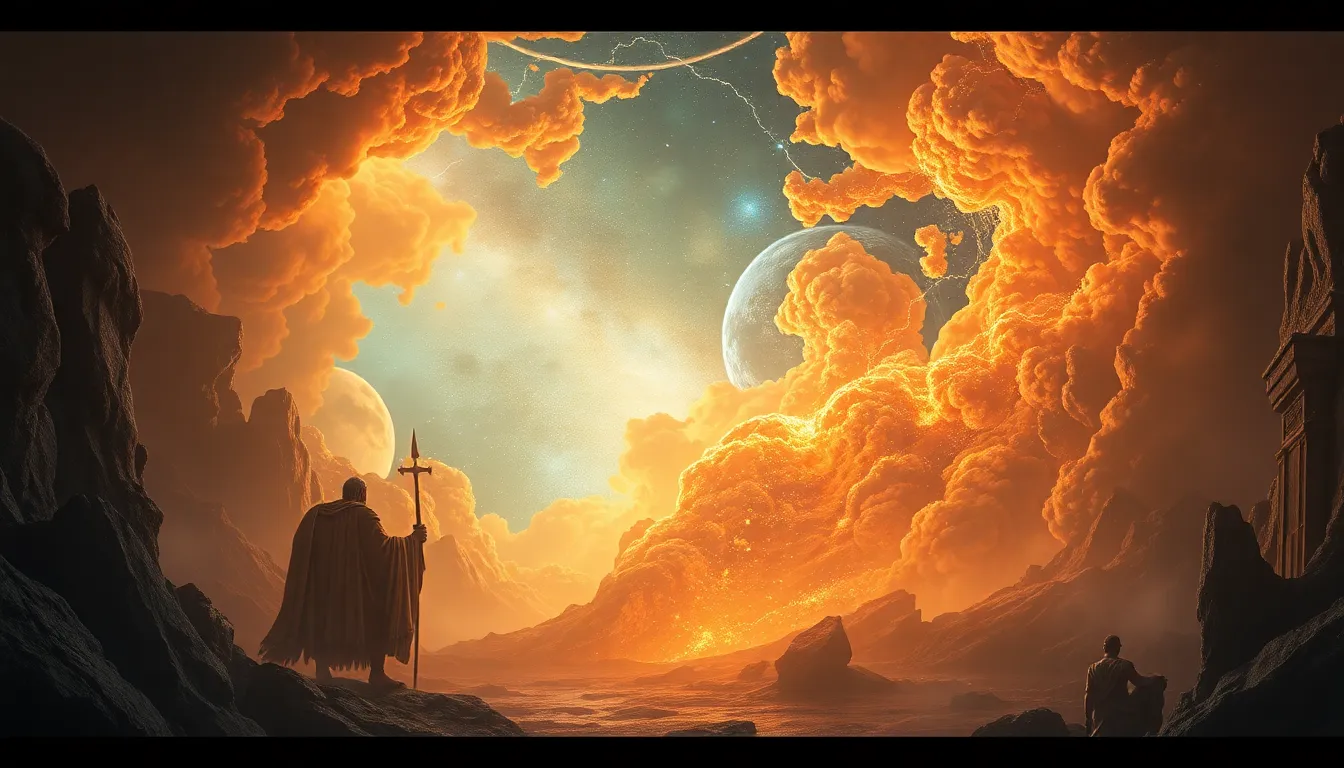
The Titanomachy: How the Titans Lost Their Cosmic Battle
I. Introduction to the Titanomachy
The Titanomachy, a pivotal conflict in Greek mythology, represents the epic struggle between the ancient Titans and the newer generation of gods, the Olympians. This monumental battle not only reshaped the divine hierarchy but also marked a significant turning point in the stories and beliefs of ancient Greeks. The Titanomachy serves as a tale of power, betrayal, and the inevitable rise of a new order.
In this article, we will delve deep into the origins of the Titans, the rise of the Olympian gods, and the ensuing war that defined the fate of the cosmos. Through exploring the complex relationships, prophecies, and battles of this mythological narrative, we will uncover the profound significance of the Titanomachy in Greek mythology.
II. The Origins of the Titans
A. Creation of the Titans by Uranus and Gaia
The Titans were born from the primordial deities Uranus (the sky) and Gaia (the earth). According to mythology, they were the first generation of gods, embodying various aspects of the natural world. Uranus and Gaia produced twelve primary Titans, which included:
- Oceanus – the Titan of the ocean
- Coeus – the Titan of intellect
- Crius – the Titan of the constellations
- Hyperion – the Titan of light
- Theia – the Titaness of sight
- Rhea – the Titaness of fertility
- Themis – the Titaness of divine law
- Iapetus – the Titan of mortality
- Mnemosyne – the Titaness of memory
- Phoebe – the Titaness of prophecy
- Tethys – the Titaness of fresh water
- Chronos – the personification of time

B. Characteristics and powers of the Titan deities
The Titans were often depicted as colossal beings with immense power and dominion over various aspects of the universe. Each Titan had unique attributes and responsibilities:
- Oceanus ruled over all bodies of water.
- Hyperion was associated with the sun, embodying light and observation.
- Rhea was the mother of many Olympian gods, showcasing her nurturing nature.
- Themis represented order and justice, influencing the laws that governed both gods and mortals.
Despite their immense power, the Titans would face challenges that would ultimately lead to their downfall in the Titanomachy.
III. The Rise of the Olympian Gods
A. The birth and early life of Zeus and his siblings
The rise of the Olympian gods began with the birth of Zeus, the youngest son of Cronus (a Titan) and Rhea. Fearing a prophecy that one of his children would overthrow him, Cronus swallowed each of his offspring at birth. However, Rhea managed to save Zeus by hiding him on the island of Crete and giving Cronus a stone wrapped in swaddling clothes instead.
As Zeus grew, he devised a plan to rescue his siblings—Hestia, Hera, Demeter, Poseidon, and Hades—from Cronus’s belly. With the help of Metis, he concocted a potion that forced Cronus to regurgitate his children, thus reuniting the family.
B. The role of prophecy and destiny in the rise of the Olympians
Prophecy played a crucial role in the rise of the Olympians. The Oracle of Delphi foretold that Cronus would be overthrown by one of his children, which prompted his desperate actions. This prophecy not only set the stage for conflict but also highlighted a recurring theme in Greek mythology: the inevitability of fate and the struggle against it. The Olympians, driven by destiny, were determined to claim their place in the cosmos.
IV. The Prelude to War
A. Tensions and conflicts between the Titans and the Olympians
As the Olympians grew in strength, tensions escalated between them and the Titans. The Titans, confident in their power and authority, viewed the younger gods as usurpers. This conflict was further fueled by differing ideologies: the Titans represented an ancient order while the Olympians signified a new age.
B. Key events leading up to the Titanomachy
The brewing storm of conflict culminated in several key events:
- Zeus’s alliance with the Cyclopes and Hecatoncheires, who were imprisoned by the Titans.
- The gathering of the Olympians, who united against their Titan oppressors.
- Rhea’s support for her children, providing them with the necessary resources to wage war.
These alliances and strategic moves set the stage for the Titanomachy, a war that would determine the fate of the universe.
V. The Great War: Key Battles and Strategies
A. Major battles and turning points during the Titanomachy
The Titanomachy lasted for ten years, characterized by fierce battles and strategic maneuvers. Key battles included:
- The Battle of Olympus, where the Olympians launched their first assault on Mount Olympus.
- The Siege of Tartarus, where the Titans attempted to reclaim their power.
One of the pivotal turning points was the Olympians’ victory in securing the aid of the Cyclopes, who forged powerful weapons for them, including Zeus’s thunderbolts. This overwhelming force shifted the balance of power in favor of the Olympians.
B. The involvement of allies and lesser deities
The war was not fought solely between the Titans and Olympians; numerous other beings participated in the conflict. Key allies included:
- Cyclopes – who provided weapons and support.
- Hecatoncheires – the hundred-handed giants who fought valiantly for the Olympians.
- Some lesser deities and nymphs who chose sides based on personal alliances.
This coalition of allies was crucial for the Olympians, enabling them to match the Titans’ strength and ultimately leading to their victory.
VI. The Fall of the Titans
A. Factors contributing to the Titans’ defeat
The Titans, despite their power, suffered a series of defeats due to various factors:
- Underestimation of the Olympians’ resolve and strength.
- Internal discord among the Titans, as some chose to side with the Olympians.
- The strategic advantage gained by the Olympians through their alliances.
B. The role of betrayal and unexpected alliances
Betrayal played a significant role in the Titans’ downfall. Notably, the Titaness Themis chose to support the Olympians, reflecting the shifting allegiances. Additionally, the Cyclopes and Hecatoncheires, once imprisoned, fought fiercely against their former captors, further weakening the Titans’ position.
VII. Aftermath and Consequences of the Titanomachy
A. The fate of the Titans post-war
After their defeat, the Titans faced severe consequences. Many were imprisoned in Tartarus, a dark and abyssal part of the underworld, where they would remain for eternity. Others, like Prometheus and Epimetheus, faced their own unique punishments. This fate symbolized the end of the Titans’ reign and the rise of a new order.
B. The establishment of the Olympian order and its impact on mythology
With the Titans defeated, the Olympians established their dominion over the cosmos. Zeus became the king of the gods, ruling from Mount Olympus, while each deity took on specific domains:
- Poseidon – god of the sea
- Hades – god of the underworld
- Hera – queen of the gods and goddess of marriage
- Demeter – goddess of agriculture
- Athena, Apollo, Artemis, and others – each governing their respective realms
This new order brought about a different dynamic in both divine and mortal affairs, influencing countless myths and stories in the process.
VIII. The Legacy of the Titanomachy in Culture and Literature
A. Influence of the Titanomachy on later myths and stories
The Titanomachy has had a lasting impact on Greek mythology and literature. Themes of power struggles