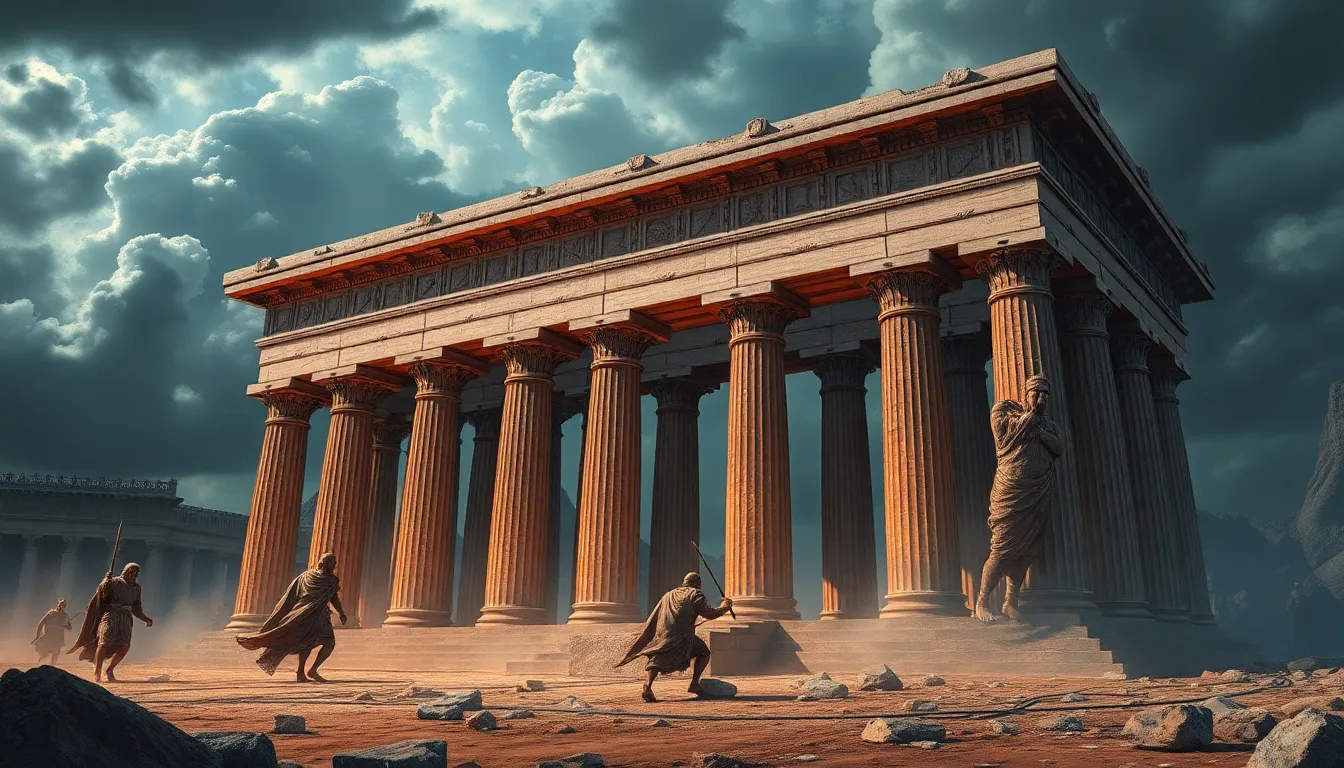
The Titanomachy: The Ancient War That Shaped Mythical History
I. Introduction
The Titanomachy is a pivotal event in Greek mythology, representing the great war between the Titans and the Olympian gods. This epic conflict not only shaped the divine hierarchy of the ancient world but also underscored themes of power, rebellion, and destiny that resonate throughout Greek mythological narratives.
Understanding the Titanomachy is crucial for anyone interested in Greek mythology, as it lays the foundation for the stories of gods, heroes, and the moral lessons they impart. This article will explore the context, key figures, major battles, and the lasting legacy of the Titanomachy in the annals of mythological history.
II. The Context of the Titanomachy
The Titanomachy arose from a generational conflict that pitted the Titans, the primordial deities born from Gaia (Earth) and Uranus (Sky), against the Olympians, the younger gods led by Zeus. This conflict was not merely one of power but also symbolized the struggle between old and new order, chaos and order, freedom and tyranny.
Key figures in this conflict included:
- Cronus: The leader of the Titans who overthrew his father, Uranus.
- Zeus: The youngest son of Cronus, who rallied the Olympians against the Titans.
- Rhea: The mother of Zeus and sister-wife of Cronus, who played a crucial role in saving her children.
The political and social implications of the Titanomachy were profound. The victory of the Olympians established a new order in the cosmos, one that emphasized justice and the rule of law over arbitrary power.
III. The Titans: Origins and Characteristics
The Titans, often referred to as the elder gods, were the offspring of Gaia and Uranus. They were powerful beings who represented various aspects of the natural world and human experience. The significance of the Titan lineage lies in their embodiment of primal forces and their role as predecessors to the Olympian gods.
Some of the major Titans included:
- Oceanus: God of the ocean, representing the vast waters that encircled the world.
- Hyperion: The Titan of light, associated with the sun and the celestial bodies.
- Themis: The Titaness of order and justice, who played a key role in maintaining balance.
- Cronus: The most infamous Titan, known for his ruthless rule and the prophecy surrounding his downfall.
The prophecy foretold that Cronus would be overthrown by one of his children, leading to his paranoia and the swallowing of his offspring. This act of tyranny set the stage for the rebellion that would culminate in the Titanomachy.

IV. The Olympians: Rise to Power
Amidst the tyranny of Cronus, Zeus and his siblings were hidden away by Rhea to protect them from their father’s wrath. Eventually, Zeus would rise to power, rallying the Olympians to challenge the Titans. The siblings of Zeus included:
- Hestia: Goddess of the hearth and home.
- Hera: Queen of the gods and goddess of marriage.
- Poseidon: God of the sea, who would play a crucial role in the conflict.
- Hades: God of the underworld, who also had a stake in the outcome.
With the help of allies such as the Cyclopes and the Hecatoncheires (giants with a hundred arms), Zeus led the charge against the Titans. These alliances were crucial, as they provided the Olympians with formidable strength and unique abilities.
V. The Great Battle: Key Events and Strategies
The battlefield of the Titanomachy was set on Mount Olympus and the surrounding regions, where the forces of the Titans faced off against the Olympians. The conflict lasted for ten years, marked by fierce battles and strategic maneuvers on both sides.
Major battles included:
- The initial skirmishes where the Olympians, though outnumbered, utilized their speed and tactics.
- The turning point when Zeus unleashed the stolen lightning bolts, a weapon forged by the Cyclopes.
- The final assault on the Titans, where the Hecatoncheires hurled massive boulders at the enemy, turning the tide in favor of the Olympians.
The involvement of mythical creatures and other deities added complexity to the battle. Creatures such as the Centaurs and Satyrs, initially neutral, were drawn into the conflict as the power struggle escalated.
VI. Aftermath of the Titanomachy
The Titanomachy concluded with the defeat of the Titans, leading to significant consequences. Most of the Titans were imprisoned in Tartarus, a deep abyss used as a dungeon of torment. This imprisonment symbolized the end of their reign and the establishment of a new divine order.
The repercussions for the defeated Titans were severe:
- Many Titans were banished to the depths of Tartarus, ensuring they could no longer threaten the Olympians.
- Some Titans, like Prometheus, would later play roles in other myths, often in opposition to the Olympian order.
The Olympians’ victory marked the beginning of an era characterized by their rule, where justice and order were enforced. Zeus became the chief deity, overseeing the heavens while his siblings took charge of various realms.
VII. Cultural Impact and Legacy of the Titanomachy
The Titanomachy has had a profound influence on later Greek literature and art. It inspired countless works, from epic poems to sculptures that depict the clash between the Titans and Olympians. Notable literary references include:
- The “Theogony” by Hesiod, which details the genealogy of the gods and the Titanomachy.
- Homer’s “Iliad” and “Odyssey,” which reference the struggles of the gods and their historical context.
Moreover, the themes of rebellion, the struggle for power, and the establishment of order resonate in other cultures’ mythologies, such as the Babylonian conflict between Marduk and Tiamat or the Hindu tales of the Devas and Asuras.
The Titanomachy’s role in shaping Western storytelling is undeniable, influencing narrative structures that explore the dynamics of power, morality, and the consequences of hubris.
VIII. Conclusion
In summary, the Titanomachy is a foundational myth that encapsulates the essence of Greek mythology and its exploration of power dynamics. The war between the Titans and Olympians established a new order that resonated throughout ancient and modern narratives alike.
Reflecting on the Titanomachy’s legacy reveals its lasting impact on art, literature, and cultural discussions about authority and rebellion. The themes woven into this ancient conflict continue to be relevant, inviting contemporary audiences to engage with the rich tapestry of mythology.
Ultimately, the Titanomachy serves as a reminder of the complexities of power and the timeless nature of mythological storytelling.