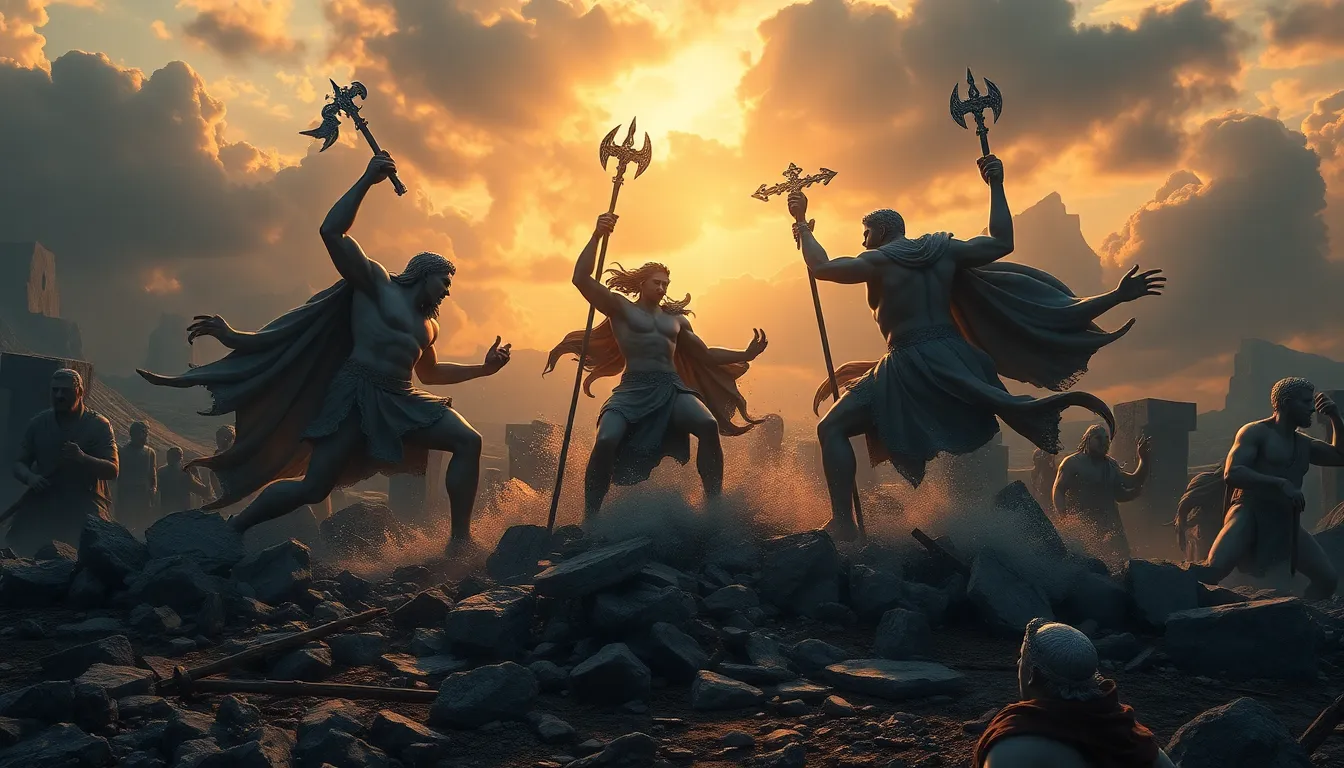
The Titanomachy: The Clash of Titans and Their Ultimate Fate
I. Introduction
The Titanomachy, often referred to as the War of the Titans, is a pivotal episode in Greek mythology that describes the epic battle between the Titans, the elder gods, and the Olympians, their offspring. This conflict not only marks a significant shift in divine power but also sets the stage for the establishment of a new order in the cosmos. The Titanomachy symbolizes themes of rebellion, the quest for power, and the inevitability of fate, making it one of the most significant narratives in ancient Greek lore.
This article aims to explore the origin of the Titans, the rise of the Olympians, the events leading up to the war, the battle itself, the ultimate fate of the Titans, and the cultural impact of this great clash.
II. The Origin of the Titans
In Greek mythology, the Titans were the first generation of divine beings, born from Gaia (the Earth) and Uranus (the Sky). They are often depicted as powerful and colossal figures who ruled during the Golden Age before the rise of the Olympians. The Titans are significant not only for their enormous strength but also for their complex personalities and relationships.
Some of the key figures among the Titans include:
- Cronus: The youngest of the Titans, who would later become the leader of the Titans and the father of the first Olympian gods.
- Rhea: Cronus’s sister and wife, known for her maternal instincts and as the mother of the Olympian gods.
- Oceanus: The Titan god of the ocean, representing the vast and unending waters that encircle the world.
Before the war, the Titans ruled the cosmos with Cronus at the helm, enjoying a reign characterized by stability and abundance. However, this peace was not to last, as internal and external pressures began to mount, leading to the eventual rebellion of their children.
III. The Rise of the Olympians
The Olympian gods, born to Cronus and Rhea, were destined to challenge the rule of the Titans. The birth of these gods is steeped in prophecy and drama, as Cronus, fearing that one of his children would overthrow him, swallowed each of them at birth. However, Rhea managed to save her youngest child, Zeus, by hiding him in a cave on the island of Crete.
Key figures in the Olympian pantheon include:
- Zeus: The youngest son of Cronus, who would grow to become the king of the gods and lead the charge against the Titans.
- Hera: Zeus’s sister and wife, goddess of marriage and family, who played a significant role in the Olympian cause.
- Poseidon: The god of the sea and Zeus’s brother, who wielded a trident and commanded the waters.
The rebellion of the Olympians was fueled by the desire for freedom and justice, and the need to fulfill the prophecy that foretold their rise. Their determination to overthrow their father, Cronus, and the Titans was a crucial turning point in the mythological narrative.

IV. Prelude to War: Tensions and Conflicts
As the Olympians grew, the tensions between them and the Titans escalated. A key prophecy foretold that Cronus would be overthrown by one of his children, which instilled fear in him and prompted him to act ruthlessly. The imprisonment of the Cyclopes and the Hecatoncheires (the hundred-handed ones) further fueled the conflict, as Cronus sought to eliminate any potential threats to his rule.
The Cyclopes were skilled craftsmen who had once served the Titans, and the Hecatoncheires were formidable warriors. Their imprisonment left the Titans without their most powerful allies, creating a significant imbalance of power.
In response, Zeus and his siblings gathered allies, including the freed Cyclopes, who would later forge powerful weapons for them, such as Zeus’s thunderbolts. The alliances formed during this time were critical, as both sides prepared for an inevitable clash.
V. The Titanomachy: The Great Battle
The Titanomachy unfolded on the plains of Thessaly, where the forces of the Titans clashed with those of the Olympians. The battlefield was characterized by tumultuous storms, earthquakes, and divine manifestations, reflecting the chaos of the conflict.
The strategies employed by both sides were marked by cunning and brute force. Zeus, wielding his thunderbolts, led the Olympians with valor, while Cronus rallied the Titans, invoking their ancient powers. Key battles and turning points during the conflict included:
- The initial skirmishes that revealed the Titans’ strength but also the resilience and ingenuity of the Olympians.
- The decisive moment when Zeus unleashed the power of the Cyclopes’ thunderbolts, turning the tide of battle.
- The intervention of the Hecatoncheires, who unleashed their immense strength to overwhelm the Titans.
Prometheus, a Titan known for his foresight and compassion, played a unique role during the war. Although he sided with the Olympians, his motivations were complex, driven by a desire to protect humanity and defy the tyranny of Cronus.
VI. The Fate of the Titans
As the Titanomachy raged on, the key events leading to the Titans’ defeat unfolded rapidly. The combined forces of the Olympians, bolstered by the Cyclopes and Hecatoncheires, proved too strong for the Titans. Ultimately, the Titans were overwhelmed by the relentless onslaught of Zeus and his allies.
The punishment and imprisonment of the Titans were severe. Following their defeat, they were cast into Tartarus, a dark and deep abyss beneath the earth, where they would remain trapped for eternity. This fate symbolized the end of their reign and the beginning of a new era under the rule of the Olympians.
The aftermath of the war saw Zeus ascend as the king of the gods, establishing a new order in the divine realm. The power struggle had concluded, but the echoes of the Titanomachy would resonate throughout Greek mythology.
VII. Cultural Impact and Legacy of the Titanomachy
The Titanomachy has been represented in various forms of ancient literature and art, influencing countless works throughout history. Poets such as Hesiod in “Theogony” and Homer in “The Iliad” depicted the battle and its aftermath, solidifying its place in Greek cultural consciousness.
Some notable representations include:
- Vase paintings that illustrate the fierce battles between Titans and Olympians.
- Literary references in epic poetry that highlight themes of power and rebellion.
- Modern adaptations in literature, film, and video games that continue to explore the narrative of the Titanomachy.
The Titanomachy has also influenced later myths and cultural narratives, serving as a metaphor for the struggle between old and new, chaos and order. Its enduring legacy is evident in the themes of power dynamics, the cyclical nature of history, and the consequences of rebellion.
VIII. Conclusion
In summary, the Titanomachy represents a foundational myth in Greek mythology, encapsulating the struggle for power and the complexities of divine relationships. It reflects on themes of rebellion, fate, and the consequences of tyranny, showcasing the eternal conflict between generations.
The enduring legacy of the Titans and Olympians serves as a reminder of the cyclical nature of power and the inevitability of change. As we reflect on the Titanomachy, we appreciate its significance not only within Greek mythology but also in the broader context of storytelling and cultural narratives throughout history.