body {
font-family: Arial, sans-serif;
line-height: 1.6;
margin: 20px;
padding: 20px;
background-color: #f9f9f9;
}
h1, h2, h3 {
color: #333;
}
p {
margin-bottom: 15px;
}
ul {
margin-left: 20px;
}
The Titanomachy: The Clash That Changed the Course of Mythology
I. Introduction to the Titanomachy
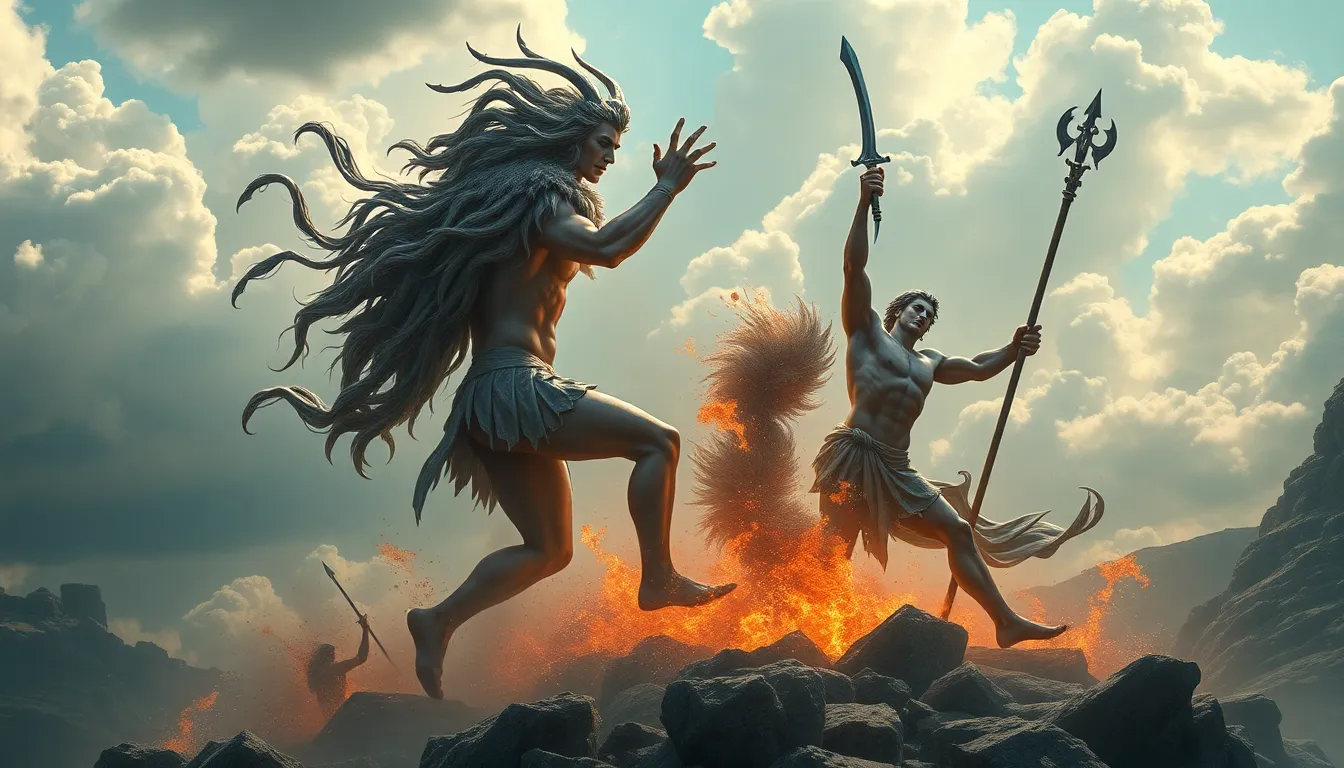
The Titanomachy refers to the epic conflict between the Titans, led by Cronus, and the Olympian gods, spearheaded by Zeus. This monumental war is a central theme in Greek mythology, symbolizing the struggle for power and the transition from the old order of deities to the new. The significance of the Titanomachy extends beyond mere battle; it represents the evolution of divine authority and the establishment of a new cosmic order.
In the context of Greek mythology, the Titanomachy serves as a backdrop for the narrative of creation, power, and the intricate relationships among the divine beings. It is a story not just of war, but of fate, ambition, and the cyclical nature of power.
II. Origins of the Titans and Olympians
A. The genealogy of the Titans
The Titans were the primordial beings who ruled during the Golden Age, before the rise of the Olympian gods. They were born from the primordial deities Gaia (Earth) and Uranus (Sky). The most notable Titans include:
- Cronus
- Rhea
- Oceanus
- Tethys
- Hyperion
- Themis
– The leader of the Titans, known for his role in the overthrowing of Uranus.
– The sister and wife of Cronus, mother of the first Olympian gods.
– The Titan god of the ocean, representing the vast waters that encircled the earth.
– The wife of Oceanus and goddess of the nourishing flow of water.
– The Titan of light, father of Helios (the Sun), Selene (the Moon), and Eos (the Dawn).
– The Titaness of divine law and order.

B. The rise of the Olympian gods and their leader, Zeus
As the Titans ruled, a prophecy foretold that one of Cronus’s children would eventually dethrone him. To prevent this, Cronus swallowed each of his offspring at birth. Rhea, desperate to save her youngest son, Zeus, tricked Cronus by hiding him in a cave on Crete and giving Cronus a stone wrapped in swaddling clothes instead.
Zeus grew up in secrecy and eventually returned to confront his father. He freed his siblings—Hestia, Demeter, Hera, Hades, and Poseidon—who had been swallowed by Cronus. This act of rebellion marked the beginning of the Titanomachy.
III. The Causes of the Titanomachy
A. The role of prophecy and fate in the conflict
The theme of prophecy plays a crucial role in the Titanomachy. The prophecy that one of Cronus’s children would overthrow him instilled fear and paranoia in the Titan king, leading him to commit heinous acts against his own offspring. This fear ultimately fueled the rebellion led by Zeus and his siblings.
B. The ambition and rebellion of the Titans against the Olympians
While the Olympians sought to reclaim their rightful place, the Titans were not willing to yield easily. The Titans’ ambition and desire to maintain their power drove them to engage in war against the Olympians. The conflict was not merely a result of family betrayal; it was a clash of ideologies and the rightful order of the universe.
IV. Key Figures in the Titanomachy
A. Major Titans: Cronus, Rhea, Oceanus, and others
Several key Titans played crucial roles in the Titanomachy:
- Cronus – The leader of the Titans, known for his ruthless nature and fear of being overthrown.
- Rhea – Although she was married to Cronus, she sided with Zeus and helped him in the war.
- Oceanus – He remained neutral during the conflict, choosing not to engage in the war.
- Atlas – One of the Titans who fought for Cronus, later punished to hold up the sky.
B. The Olympian gods: Zeus, Hera, Poseidon, and their allies
The Olympians, led by Zeus, also had their share of powerful figures:
- Zeus – The king of the gods, who led the Olympians to victory.
- Hera – Zeus’s wife and sister, who played a significant role in supporting her husband’s quest.
- Poseidon – The god of the sea, who was instrumental in the fight against the Titans.
- Hades – The god of the underworld, who would later rule the realm of the dead.
V. The Course of the War
A. Major battles and strategies employed
The Titanomachy lasted for a decade and was marked by several significant battles and strategic maneuvers. The Olympians, with the help of the Cyclopes and the Hecatoncheires (hundred-handed ones), crafted powerful weapons that gave them an edge in the conflict. Zeus received the thunderbolt, Poseidon the trident, and Hades the helmet of invisibility.
Key battles included:
- The initial skirmishes where Zeus and his allies sought to liberate their siblings from Cronus.
- The climactic battle on Mount Olympus, where the Olympians faced the Titans head-on.
- The final confrontation at the shores of Tartarus, where the Titans were ultimately defeated.
B. The role of allies and neutral parties in the conflict
Throughout the Titanomachy, several entities played crucial roles:
- The Cyclopes and Hecatoncheires sided with Zeus, providing crucial support in crafting weapons and fighting.
- Some Titans, like Oceanus, chose not to engage, demonstrating the complexities of alliances in the divine hierarchy.
VI. The Aftermath of the Titanomachy
A. The defeat of the Titans and their punishment
The Titanomachy ended with the Olympians emerging victorious. Cronus and the Titans were imprisoned in Tartarus, a deep abyss used as a dungeon of torment. The Hecatoncheires were appointed as their jailers, ensuring they would not escape their punishment.
B. The establishment of Olympian rule and its implications for mythology
With the defeat of the Titans, Zeus and the Olympians established a new order of gods. This marked a significant transition in Greek mythology, as the Olympians took on distinct personalities and domains, shaping the narratives that would follow. The rule of Zeus initiated the age of the gods, characterized by the complexity of divine relationships and the anthropomorphism of deities.
VII. Cultural Impact of the Titanomachy
A. The Titanomachy in ancient literature and art
The Titanomachy has been a rich source of inspiration in ancient literature, poetry, and art. Notable works include:
- Hesiod’s Theogony, which provides a detailed account of the genealogy of the gods and the events of the Titanomachy.
- Various vase paintings and sculptures depicting the battles between the Titans and Olympians, illustrating the dramatic conflict.
B. Its influence on later mythological narratives and themes
The themes of the Titanomachy resonate throughout Greek mythology, influencing stories of heroism, betrayal, and the struggle for power. The narratives established the framework for understanding divine