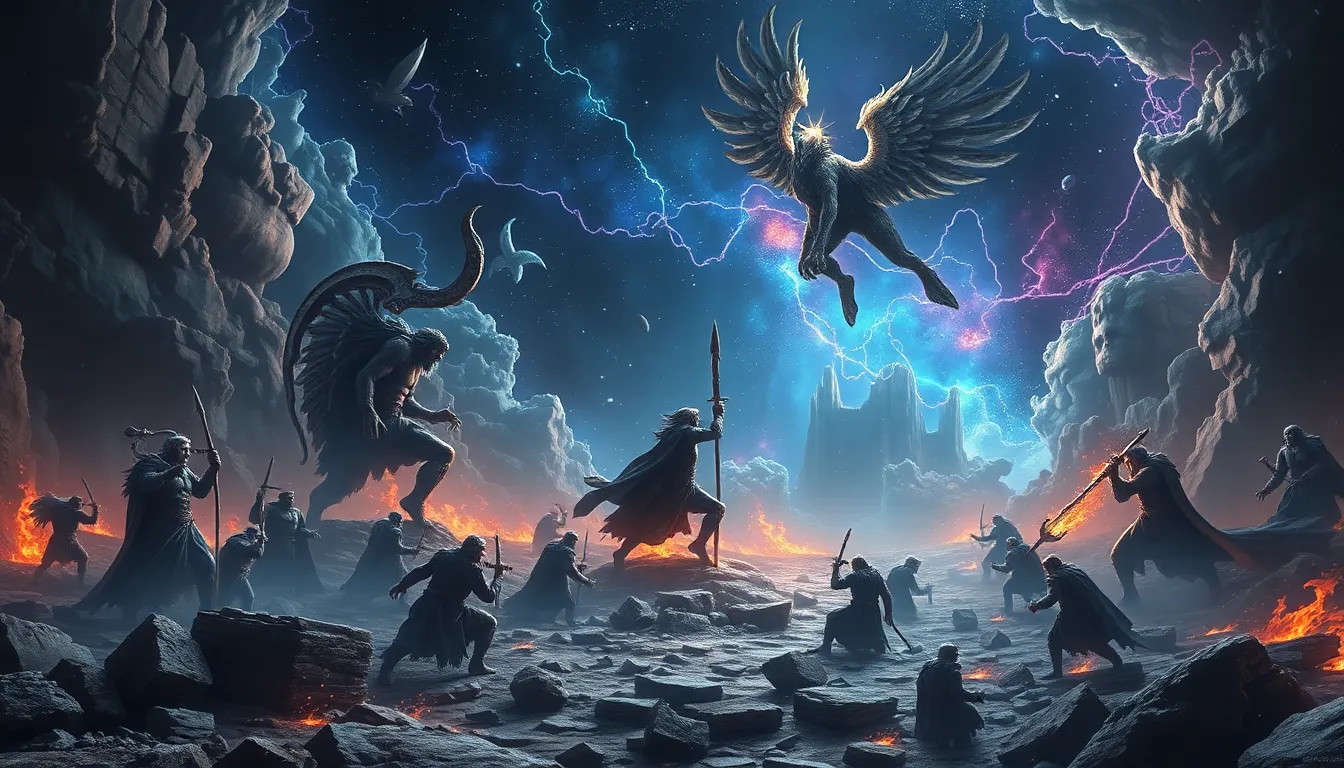
The Titanomachy: The Epic Struggle for the Fate of the Universe
I. Introduction to the Titanomachy
The Titanomachy, a foundational myth of ancient Greek mythology, represents the epic struggle between the Titans and the Olympian gods for supremacy over the universe. This monumental war is not merely a tale of conflict; it encapsulates themes of power, rebellion, and the inevitable rise of a new order.
In Greek mythology, the Titanomachy serves as a critical turning point that reshapes the cosmos and sets the stage for the stories of the Olympian gods. It is a narrative that highlights the cycles of power and the transition from one generation of deities to another, reflecting the ancient Greeks’ understanding of fate and destiny.
Understanding the Titanomachy is crucial for grasping the broader context of Greek mythology, as it influences countless myths, epics, and literary works throughout history.
II. The Titans: Rulers of the Primordial World
The Titans were the powerful deities that ruled during the Golden Age of Greek mythology, long before the rise of the Olympians. They were the children of Gaia (Earth) and Uranus (Sky) and represented various aspects of the natural world and human experience.
- Cronus: The leader of the Titans, known for his role in the overthrow of Uranus and later, the father of Zeus.
- Rhea: The sister and wife of Cronus, she is often associated with fertility and motherhood.
- Oceanus: The Titan of the ocean, representing the vast and uncharted waters surrounding the earth.
- Hyperion: The Titan of light, often associated with the sun.
During their reign, the Titans were seen as powerful and often capricious beings who governed the cosmos with little regard for the beings beneath them. Their rule was marked by a lack of order, which ultimately led to their downfall.
III. The Rise of the Olympian Gods
The Olympian gods emerged from the descendants of the Titans, most notably through Cronus and Rhea. The birth of Zeus, Hera, and their siblings marked the beginning of a new divine lineage poised to challenge the Titans.
- Zeus: The youngest son of Cronus, destined to overthrow his father and lead the Olympians.
- Hera: The goddess of marriage and family, Zeus’ sister and wife, who plays a crucial role in supporting the Olympian cause.
- Poseidon: The god of the sea, known for his temper and power over aquatic realms.
The prophecy that one of Cronus’s children would dethrone him fueled the rebellion of the Olympians against their father. This prophecy, combined with the desire for justice and order, motivated the younger gods to unite and fight for their rightful place in the cosmos.

IV. The Prelude to War: Tensions and Alliances
As tensions mounted between the Titans and the Olympians, the groundwork for war was laid through a series of strategic alliances. The Olympians sought out powerful allies to bolster their forces against the Titans.
Key alliances included:
- The Cyclopes: Known for their craftsmanship, they provided the Olympians with formidable weapons, including Zeus’ thunderbolts.
- The Hecatoncheires: Giant beings with a hundred arms, who were instrumental in the battles against the Titans.
The influence of prophecy loomed large in this period. The Olympians were driven by a sense of destiny, believing that their victory was preordained, which further solidified their resolve to confront the Titans.
V. The Epic Battle: Key Events and Strategies
The Titanomachy was a cataclysmic war that lasted for ten years, characterized by fierce battles and strategic maneuvers. Each side employed unique tactics and weapons, with the fate of the universe hanging in the balance.
- Initial Skirmishes: The war began with a series of battles that tested the strengths and weaknesses of both sides. The Titans initially held the advantage due to their experience and powerful abilities.
- Turning Point: The capture of the Cyclopes and Hecatoncheires by Cronus shifted the tide of battle. However, they were freed by Zeus, who then received invaluable weapons from the Cyclopes.
- Climactic Showdown: The final battle saw Zeus unleashing his thunderbolts, leading to the defeat of the Titans. The Hecatoncheires played a critical role in hurling massive rocks at their foes, further tipping the balance.
The climax of the conflict resulted in the catastrophic fall of the Titans, who were ultimately imprisoned in Tartarus, the deep abyss used as a dungeon of torment and suffering.
VI. The Aftermath: Consequences of the Titanomachy
The aftermath of the Titanomachy marked a profound transformation in the Greek cosmological order. The Olympian gods emerged victorious, establishing their dominion over the universe.
The fate of the Titans was grim, as they were cast into Tartarus, where they would be subjected to eternal punishment. However, some myths suggest that certain Titans, like Prometheus, found ways to remain influential in the world.
The Olympians solidified their rule, with Zeus becoming the chief deity, overseeing the heavens, while Poseidon governed the seas and Hades ruled the underworld. This restructuring of divine power brought about a new era of order and stability.
VII. Cultural Impact and Interpretations of the Titanomachy
The Titanomachy has had a profound influence on ancient Greek culture, literature, and art. It has inspired countless works, from epic poems to sculptures and plays, symbolizing the struggle for power and justice.
- Literature: The story of the Titanomachy is recounted in ancient texts such as Hesiod’s “Theogony,” which explores the genealogy of gods and the creation of the universe.
- Art: The theme of the Titanomachy has been depicted in various forms, including pottery, sculptures, and paintings, often showcasing the dramatic battles and the personalities of the gods.
- Modern Interpretations: Today, the Titanomachy resonates in discussions about power dynamics, authority, and rebellion, serving as a timeless allegory for societal struggles.
VIII. Conclusion: The Legacy of the Titanomachy
The Titanomachy is more than just a myth; it is a reflection of the eternal themes of rebellion and the quest for order within chaos. It highlights the cyclical nature of power, where the old must be overthrown for the new to rise.
In today’s world, the Titanomachy remains relevant as societies grapple with issues of authority, governance, and the struggle for rights. Its lessons about the consequences of tyranny and the importance of justice echo throughout history.
Ultimately, the Titanomachy stands as a testament to the enduring significance of mythology, reminding us of the complex interplay between divine beings and the natural order of the universe.