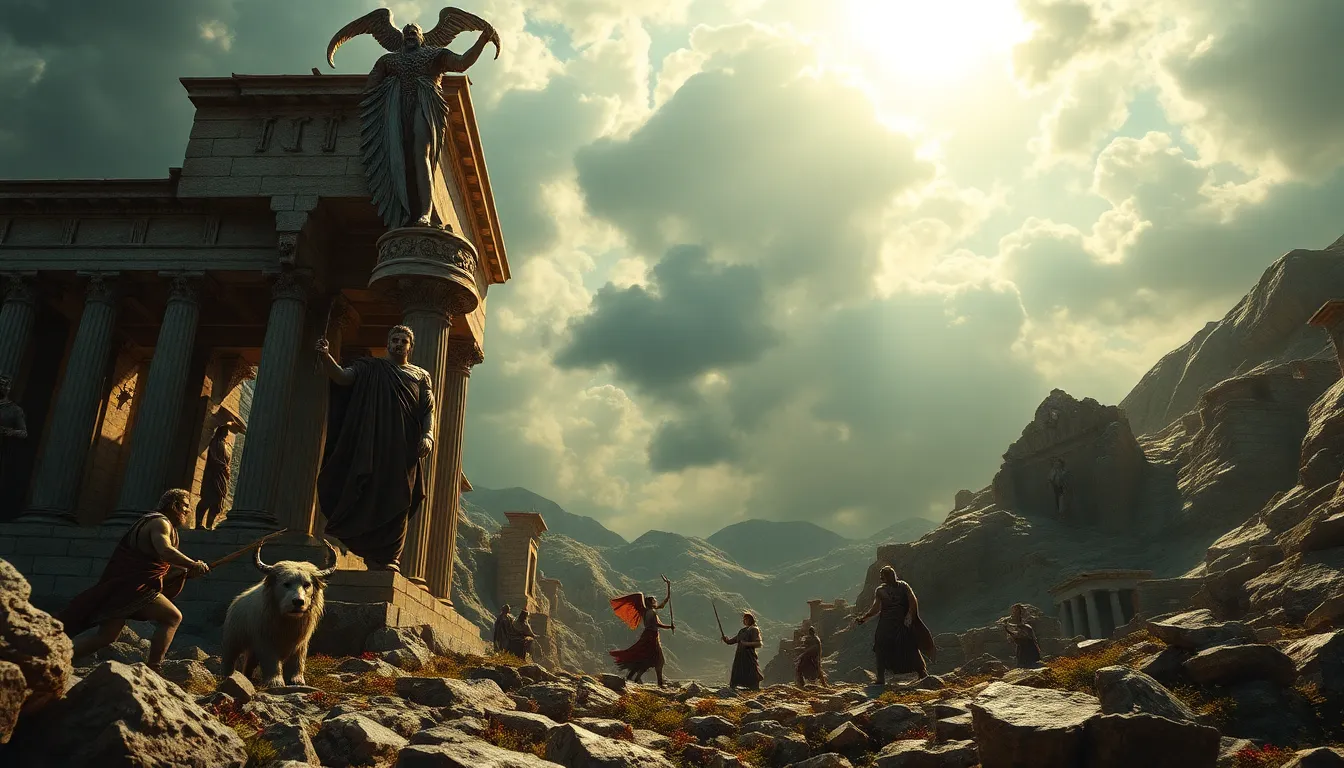
The Titanomachy: The Myths Behind the Epic Struggle
I. Introduction to the Titanomachy
The Titanomachy, a fundamental episode in Greek mythology, marks the epic battle between the Olympian gods, led by Zeus, and the Titans, the primordial deities who ruled before them. This monumental conflict symbolizes the struggle for power and the transition from the old order of Titans to the new reign of the Olympians. The Titanomachy is rich in themes of rebellion, justice, and the inevitable course of fate, making it a cornerstone of ancient Greek narratives.
The primary deities involved in this struggle include Zeus, the king of the Olympians, and Cronus, the leader of the Titans. Other significant figures play pivotal roles, creating a rich tapestry of alliances, betrayals, and epic confrontations.
II. The Origins of the Titans
The Titans were born from the primordial deities Uranus (the Sky) and Gaia (the Earth). Their union produced a formidable lineage of giants who would come to embody various aspects of the natural world and human experience. The original Titans included:
- Cronus: The leader of the Titans, associated with time and the harvest.
- Rhea: Sister and wife of Cronus, goddess of fertility and motherhood.
- Oceanus: The Titan of the ocean, symbolizing the vastness of water.
- Hyperion: The Titan of light, often associated with the sun.
- Themis: The Titaness of divine law and order.
- Coeus: The Titan of intellect and the axis of heaven.
- Mnemosyne: The Titaness of memory and the mother of the Muses.
Each Titan had distinct attributes and responsibilities, representing various elements of the universe, which set the stage for their eventual conflicts with the Olympian gods.
III. The Rise of the Olympian Gods
The rise of the Olympian gods began with the birth of Zeus, the son of Cronus and Rhea. According to prophecy, Cronus was doomed to be overthrown by one of his children, leading him to swallow each of his offspring immediately after birth. However, Rhea managed to save Zeus by hiding him in a cave on Mount Ida in Crete and giving Cronus a stone wrapped in swaddling clothes instead.
Once grown, Zeus returned to confront Cronus and freed his siblings—Hestia, Hera, Demeter, Poseidon, and Hades—who had been consumed by their father. This act of rebellion united the Olympian gods, who would become his allies in the fight against the Titans.

IV. The Prelude to War: Tensions Among the Deities
Before the full-scale conflict of the Titanomachy, tensions brewed among the Titans. The initial conflicts arose from Cronus’ tyrannical rule and the dissatisfaction of the younger Titans, who began to question their father’s authority. Notably, some Titans opted to side with Zeus against Cronus, highlighting the complexities of loyalty and rebellion.
Key events leading to the declaration of war included:
- The Prophecy: The foretelling of Cronus’ downfall created fear and paranoia among the Titans.
- The Gathering of Allies: Zeus sought support from other powerful entities like the Cyclopes and the Hecatoncheires, who were imprisoned by Cronus.
- Divine Betrayals: Some Titans, including Prometheus and Epimetheus, chose to aid Zeus, leading to a fracture within the Titan ranks.
V. The Epic Battle: Key Events and Strategies
The Titanomachy itself was an epic battle that lasted for ten years, characterized by fierce confrontations and strategic maneuvers. The major battles included:
- The Siege of Mount Olympus: The Olympians launched an offensive against the Titans, who were fortified on Mount Othrys.
- The Use of Thunderbolts: Zeus wielded thunderbolts, forged by the Cyclopes, as his primary weapon, allowing him to strike fear into the Titans.
- The Hecatoncheires: The hundred-handed giants aided the Olympians by hurling massive boulders at the Titans, tipping the scales in favor of Zeus.
- Prometheus’ Role: Prometheus, a Titan who sided with Zeus, played a crucial role in strategizing and providing intelligence about the Titans’ defenses.
As the conflict raged on, the tide turned in favor of the Olympians, leading to a decisive victory that would reshape the divine hierarchy.
VI. The Aftermath of the Titanomachy
Following their victory, the Olympians established their rule over the cosmos. The defeated Titans faced various fates, including imprisonment and punishment. The most notable outcomes were:
- Imprisonment in Tartarus: Many Titans, including Cronus, were cast into the abyss of Tartarus, a dark and deep pit used as a dungeon of torment.
- Reform and Redemption: Some Titans, like Prometheus, were punished but later rehabilitated, finding ways to contribute positively to the Olympian realm.
The establishment of the Olympian rule fundamentally changed the dynamics of the divine world, introducing a new order that emphasized justice, order, and the importance of human interaction with the gods.
VII. Symbolism and Themes in the Titanomachy
The Titanomachy is imbued with rich symbolism and themes that resonate throughout Greek mythology. Key themes include:
- Power and Authority: The struggle between the Titans and Olympians represents the conflict between old and new forms of governance.
- Rebellion: The narrative underscores the importance of challenging oppressive authority, as seen in Zeus’ revolt against Cronus.
- Divine Justice: The eventual triumph of the Olympians is portrayed as a restoration of balance and order in the universe.
The Titanomachy’s influence extends beyond its immediate narrative, impacting later myths, literature, and interpretations of power and morality in various cultures.
VIII. Conclusion: The Legacy of the Titanomachy
The Titanomachy remains a pivotal tale in Greek mythology, illustrating the complexities of divine relationships and the nature of power. Its cultural significance in ancient Greece cannot be overstated; it served as a foundational myth that explained the origins of the gods and their authority over humanity.
In modern interpretations, the Titanomachy continues to resonate, influencing literature, art, and popular culture. The themes of rebellion, justice, and the struggle for power are as relevant today as they were in ancient times, ensuring the legacy of the Titanomachy endures through the ages.