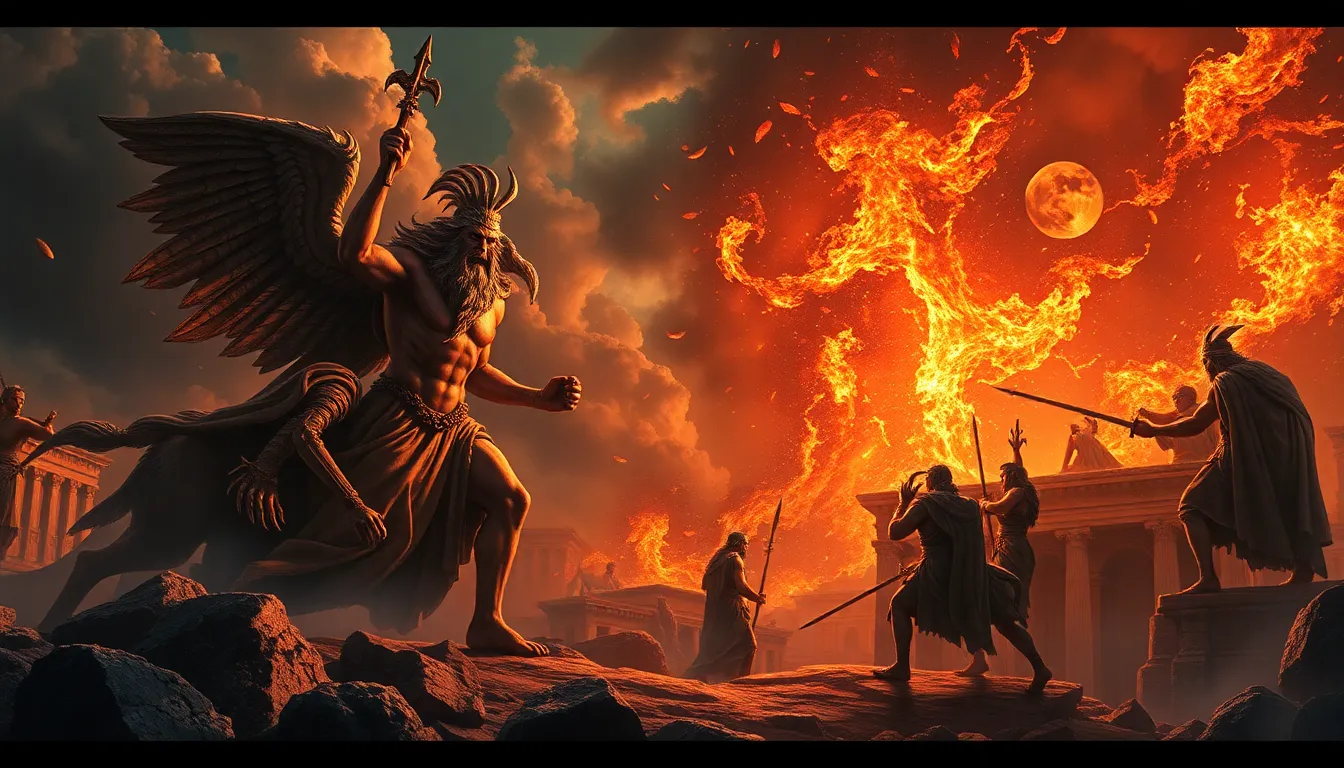
The Titanomachy: The War That Divided the Gods of Olympus
I. Introduction to the Titanomachy
The Titanomachy, often regarded as one of the most significant events in Greek mythology, represents the epic struggle between the Titans and the Olympian gods. This war was not merely a battle for supremacy but a profound conflict that reshaped the very fabric of divine power and authority in ancient Greek beliefs.
At its core, the Titanomachy was a clash between the elder gods, known as the Titans, and the younger generation of gods who would eventually come to inhabit Mount Olympus. The outcome of this war established the Olympian deities as the ruling pantheon of the Greek world and set the stage for the mythology that would follow.
This conflict is steeped in both historical and mythological context, reflecting the transition from one epoch of divine governance to another and illustrating the themes of power, rebellion, and destiny.
II. The Titans: Origins and Characteristics
The Titans were the primordial deities that preceded the Olympians, born from Gaia (Earth) and Uranus (Sky). They represented various aspects of the natural world and human experience, embodying the forces of nature and the cosmos.
Key Titans involved in the conflict included:
- Cronus: The leader of the Titans, known for his fear of being overthrown by his own children.
- Rhea: The sister and wife of Cronus, who played a critical role in saving Zeus.
- Oceanus: The Titan of the sea, representing the vast waters encircling the earth.
- Hyperion: The Titan of light, known as the father of the sun, moon, and dawn.
The Titans were often depicted as colossal beings with immense power, representing the chaotic and untamed forces of the universe. In pre-Olympian mythology, they were seen as the rulers of the cosmos before the rise of the Olympians, and their stories often highlight themes of hubris and the consequences of defiance against fate.
III. The Olympian Gods: Rise to Power
The Olympian gods emerged as the new ruling deities, led by Zeus, the youngest son of Cronus and Rhea. The Olympian pantheon included major figures such as:
- Zeus: The king of the gods, god of the sky and thunder.
- Hera: The queen of the gods, goddess of marriage and family.
- Poseidon: God of the sea, earthquakes, and horses.
- Hades: God of the underworld, ruling over the realm of the dead.
The rise of the Olympians was foreshadowed by a prophecy that foretold the overthrow of Cronus by one of his children. This prophecy instilled fear in Cronus, leading him to swallow his offspring to prevent his downfall. However, Rhea managed to save Zeus by hiding him and giving Cronus a stone wrapped in swaddling clothes instead.

IV. The Spark of Conflict
The Titanomachy was ignited by Cronus’s paranoia and fear of being overthrown. After swallowing his children, he believed he had secured his reign, but the birth of Zeus marked a turning point. Zeus, once grown, sought to rescue his siblings and fulfill the prophecy.
Key events leading to the war included:
- The liberation of Zeus’s siblings: After being hidden and raised in secret, Zeus returned to confront Cronus and rescue his brothers and sisters.
- The formation of alliances: Zeus formed crucial alliances with other deities and beings, including the Cyclopes and Hecatoncheires, who would aid the Olympians in their battle against the Titans.
These alliances were pivotal, as they provided the Olympians with formidable forces to counter the might of the Titans and reinforced the theme of unity against tyranny.
V. The War of the Titans: Key Battles and Strategies
The Titanomachy unfolded over a decade, marked by epic battles and strategic maneuvers. The conflict was not merely a series of skirmishes but a full-scale war that tested the strength and resolve of both sides.
Significant battles during the Titanomachy included:
- The Battle of Olympus: The primary confrontation where the Olympians, led by Zeus, faced off against the Titans for ultimate control of the heavens.
- The Siege of Tartarus: The Titans attempted to launch counterattacks from their stronghold in Tartarus, but the Olympians’ strategic advantages led to their defeat.
The Olympians had several strategic advantages, such as:
- The support of the Cyclopes, who forged powerful weapons, including Zeus’s thunderbolts.
- The Hecatoncheires, with their hundred arms, provided overwhelming force during battles.
Additionally, Gaia played a complex role in the conflict, sometimes siding with her elder children, the Titans, while also providing support to Zeus, reflecting her ambivalence toward the outcome of the war.
VI. The Aftermath of the Titanomachy
The Titanomachy culminated in the decisive defeat of the Titans, who were subsequently imprisoned in Tartarus, a deep abyss used as a dungeon of torment. This imprisonment reflected the new order established by the Olympians, who now reigned supreme over the cosmos.
The aftermath of the Titanomachy led to significant changes in the power dynamics of Greek mythology:
- The Olympians established a new hierarchy, with Zeus at the helm as the king of the gods.
- New myths and stories flourished under the Olympian rule, emphasizing themes of justice, order, and the responsibilities of power.
The victory of the Olympians also marked the end of the Titan era, transforming the landscape of divine governance and altering the relationships between gods and mortals in ancient Greek belief systems.
VII. Cultural Interpretations and Legacy
The Titanomachy has been a significant subject in ancient Greek literature and art, influencing countless works throughout history. Notable representations include:
- The epic poem “Theogony” by Hesiod, which details the genealogy of the gods and narrates the Titanomachy.
- Various sculptures and paintings from ancient Greece depicting the battles between the Titans and Olympians.
In modern interpretations, the Titanomachy has found its way into popular culture, inspiring numerous films, books, and video games that explore themes of rebellion, power struggles, and the battle between good and evil.
Moreover, the Titanomachy has left a lasting influence on Western mythology and storytelling, often serving as a metaphor for the generational conflict and the cyclical nature of power.
VIII. Conclusion: The Titanomachy’s Enduring Significance
The Titanomachy stands as a profound narrative within Greek mythology, encapsulating key themes of power, authority, and rebellion. The conflict between the Titans and Olympians serves as a reminder of the struggles inherent in the quest for dominance and the complexities of familial relationships amid power dynamics.
Through the lens of the Titanomachy, we can reflect on the dichotomy of order versus chaos, the consequences of fear and ambition, and the inevitability of change in governance. This ancient war continues to resonate today, reminding us of the timeless nature of these themes in our own histories and narratives.
In summary, the Titanomachy is not just a story of gods warring for supremacy; it is a rich tapestry of myth that reflects human experiences and the eternal struggle for power, making it a crucial part of our understanding of mythology and its relevance in contemporary culture.