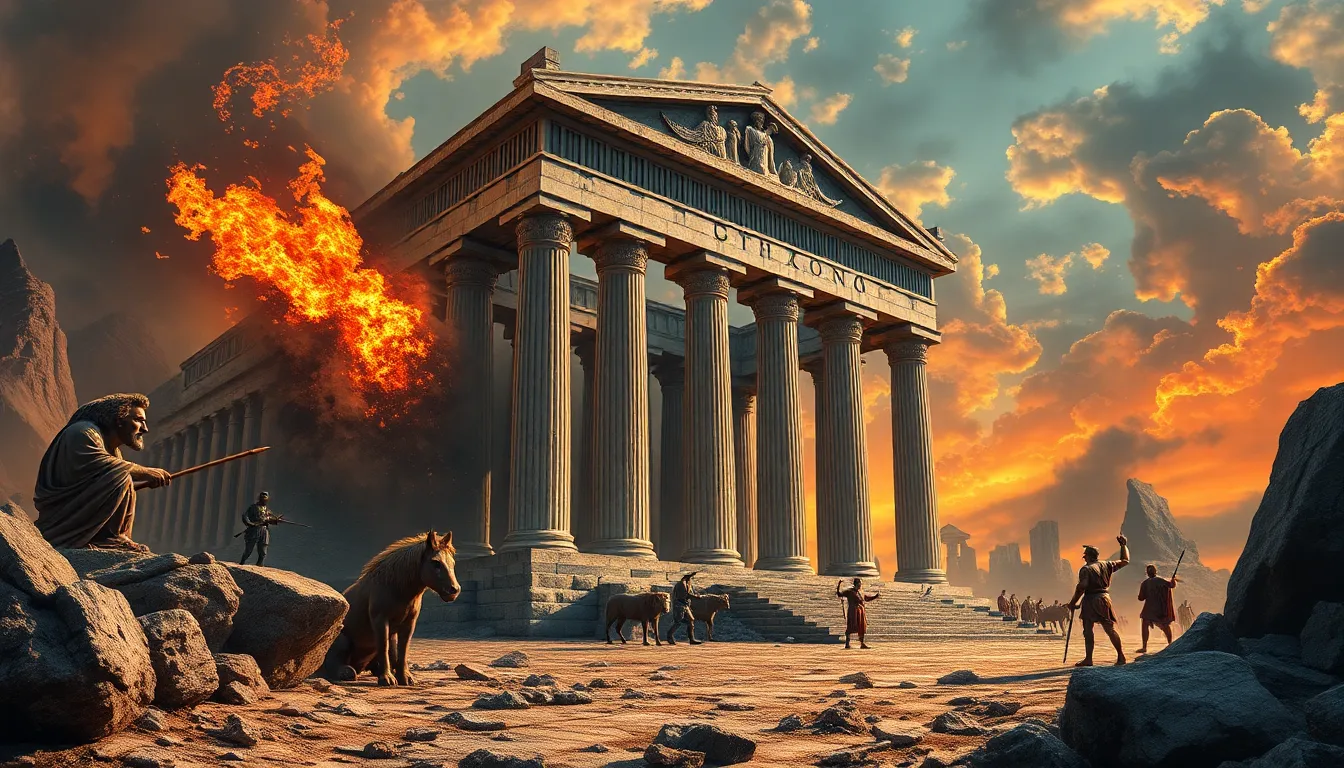
The Titanomachy: The War That Laid the Foundation of Olympus
I. Introduction to the Titanomachy
The Titanomachy, a monumental conflict in Greek mythology, represents the epic battle between the ruling Titans and the younger generation of Olympian gods. This war not only defined the hierarchy of divine beings but also set the stage for the cultural and spiritual narratives that would resonate throughout ancient Greece. The significance of the Titanomachy lies in its exploration of power, destiny, and the transformative nature of conflict.
Central to the Titanomachy are the Titans, the primordial deities who once ruled the cosmos, and the Olympians, led by the formidable Zeus. This struggle for supremacy highlights the themes of rebellion, fear, and the inevitability of change, making it a pivotal moment in Greek mythology.
As we delve deeper into the Titanomachy, we will uncover the key players, the causes of the conflict, the battles fought, and the lasting legacy that this war has left on subsequent myths and cultural expressions.
II. The Titans: Rulers of the Primordial World
The Titans were the original deities of Greek mythology, born from the primordial beings Uranus (the sky) and Gaia (the earth). Known for their immense strength and size, the Titans held dominion over various aspects of the cosmos and were revered as the ancestors of both gods and mortals.
A. Who were the Titans?
The Titans represented various natural and cosmic forces, embodying the elements of the world and the primal energies of existence. They were not merely gods but also symbols of the natural order before the rise of the Olympians.

B. Key figures among the Titans
- Cronus: The leader of the Titans, known for his cunning and ruthlessness.
- Rhea: The sister and wife of Cronus, who played a crucial role in the preservation of the Olympians.
- Oceanus: The Titan god of the ocean, representing the vast waters that encircled the earth.
- Hyperion: The Titan of light and observation, often associated with the sun.
- Themis: The Titaness of divine law and order, symbolizing justice and fairness.
C. The Titan’s reign and their relationship with the cosmos
The Titans ruled during the Golden Age, a time characterized by peace and prosperity. They were seen as benevolent rulers, providing stability and nurturing the earth. However, their reign was not without conflict, as the younger gods began to resent their authority, leading to the eventual uprising known as the Titanomachy.
III. The Rise of the Olympians
As the Titans ruled, a new generation of gods emerged, led by Zeus, the youngest son of Cronus and Rhea. The Olympians represented a shift in power dynamics, embodying the ideals of justice, order, and the potential for growth.
A. Introduction to the Olympian gods, led by Zeus
Zeus, known for his strength and wisdom, became the figurehead of the Olympians. His rise marked the beginning of a new era in the mythological landscape of Greece. Alongside him were his siblings and allies, including Hera, Poseidon, Demeter, Hestia, and Hades, each playing crucial roles in the unfolding narrative.
B. The lineage of the Olympians and their claims to power
The Olympians traced their lineage back to the Titans, but they distinguished themselves through their unique attributes and virtues. Their claims to power were not just based on lineage but also on their capacity to govern justly and wisely.
C. The role of prophecy and destiny in the Olympians’ uprising
Prophecy played a significant role in the rise of the Olympians. It was foretold that Cronus would be overthrown by one of his children, which instilled fear in him and led to his tyrannical actions. This prophecy not only set the stage for the conflict but also shaped the destinies of the gods involved.
IV. The Causes of the Titanomachy
The Titanomachy was not merely a spontaneous conflict; it arose from deep-seated fears and tensions within the divine family.
A. Cronus’s fear of being overthrown
As the ruler of the Titans, Cronus was haunted by the prophecy that he would be overthrown by one of his children. This fear drove him to commit heinous acts, including swallowing his offspring to prevent them from challenging his authority.
B. The prophecy of Zeus and its implications
The prophecy surrounding Zeus foretold that he would rise against Cronus and lead the Olympians to victory. This foreknowledge not only fueled the conflict but also created a sense of inevitability regarding the outcome.
C. The growing discontent among the younger deities
The younger gods, having witnessed their siblings’ fates, grew increasingly discontent with Cronus’s tyrannical rule. Their desire for freedom and justice became a catalyst for the revolt, culminating in the outbreak of the Titanomachy.
V. The Great Clash: Battles of the Titanomachy
The Titanomachy was marked by fierce battles, cunning strategies, and significant alliances that ultimately determined the fate of the cosmos.
A. Key battles and strategies employed by both sides
Both the Titans and the Olympians engaged in epic battles, employing various strategies to gain the upper hand. The Titans, with their sheer power and experience, initially dominated the battlefield. However, the Olympians, led by Zeus, utilized clever tactics and their unique abilities to counter the Titans’ strength.
B. The role of allies and neutral parties
- Gaia: The personification of Earth, who played a crucial role in supporting Zeus and the Olympians.
- Cyclopes: Skilled craftsmen who forged powerful weapons for the Olympians, such as Zeus’s thunderbolt.
- Hecatoncheires: The hundred-handed giants who sided with the Olympians, providing crucial support in battle.
C. Significant events that turned the tide in favor of the Olympians
Several pivotal moments turned the tide in favor of the Olympians. The forging of Zeus’s thunderbolt by the Cyclopes and the overwhelming strength of the Hecatoncheires played decisive roles in the battles. These events galvanized the Olympians and marked a turning point in the conflict.
VI. Aftermath of the Titanomachy
The conclusion of the Titanomachy brought about significant changes in the divine hierarchy and the structure of the cosmos.
A. The defeat of the Titans and their imprisonment
After a prolonged and fierce struggle, the Olympians emerged victorious. The Titans, once rulers of the cosmos, were defeated and imprisoned in Tartarus, a deep abyss used as a dungeon of torment.
B. The establishment of Olympus as the new center of power
With the Titans vanquished, the Olympians established their reign atop Mount Olympus, which became the new center of power and divine governance. This marked the beginning of a new era in Greek mythology, characterized by the rule of the Olympians and their complex interactions with humanity.
C. The reorganization of the cosmos and the roles of the new gods
The Titanomachy led to a reorganization of the cosmos, with the Olympians taking on distinct roles and domains. Zeus became the king of the gods, ruling over the sky and thunder, while his siblings governed various aspects of the earth, sea, and underworld. This reorganization laid the foundation for the myths and stories that would follow.
VII. The Legacy of the Titanomachy
The Titanomachy has left an indelible mark on Greek mythology and culture, influencing countless narratives and artistic expressions throughout history.
A. Influence on later Greek myths and cultural narratives
The themes of power, rebellion, and the struggle between generations resonate throughout later myths. The stories of heroes, demigods, and mortals often draw upon the lessons learned from the Titanomachy, exploring the complexities of destiny and free will.
B. Symbolism of the Titanomachy in the context of power and rebellion
The Titanomachy symbolizes the eternal struggle for power and the cyclical nature of authority. It reflects the idea that every generation must confront and overcome the challenges posed by its predecessors.
C. The Titanomachy in art, literature, and modern interpretations
Throughout history, the Titanomachy has been depicted in various forms of art and literature. From ancient pottery and sculptures to modern films and novels,