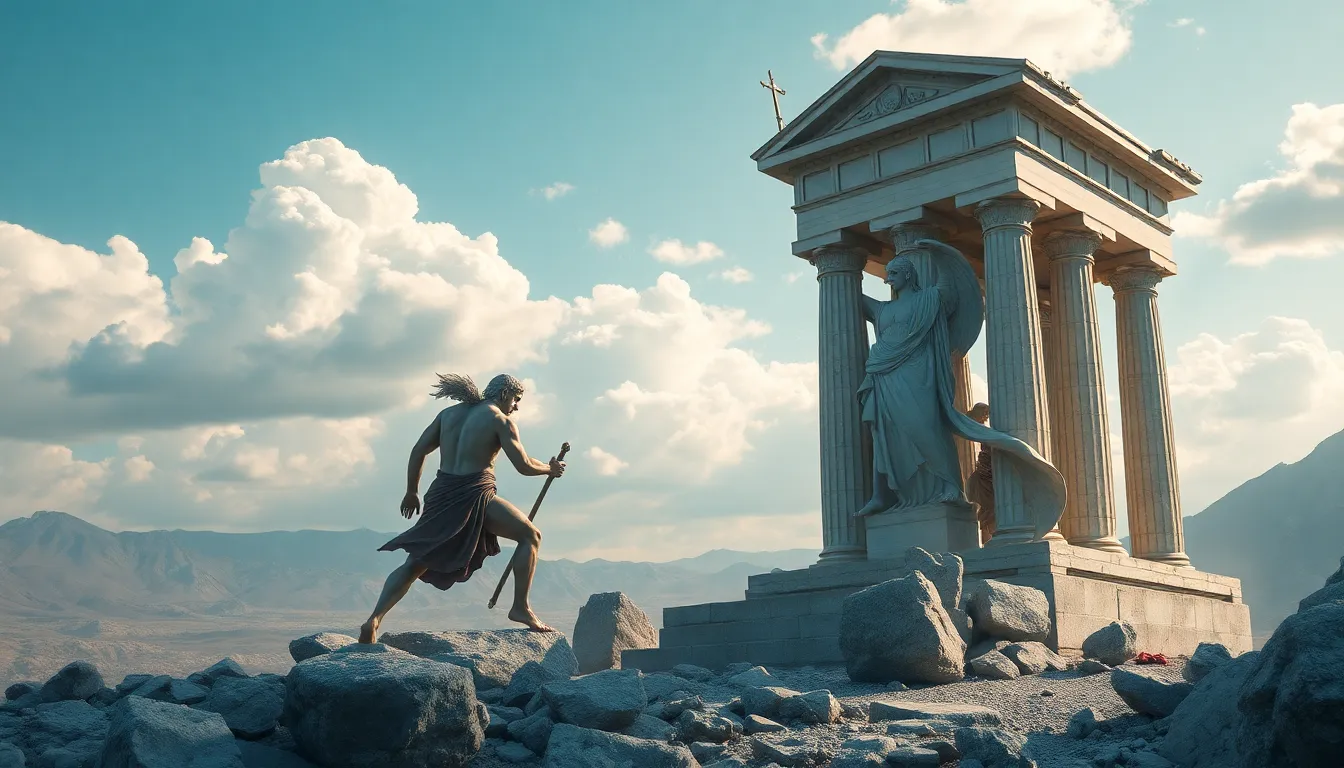
The Titanomachy: The War That Reshaped Divine Relationships
I. Introduction to the Titanomachy
The Titanomachy, a monumental conflict in Greek mythology, marks a significant turning point in the pantheon of ancient gods. This war, fought between the Titans, the elder gods, and the Olympians, the new generation of deities, reshaped divine relationships and established a new order among the gods. This article delves into the intricacies of the Titanomachy, exploring its origins, the events of the war, and its lasting impact on mythology and culture.
The significance of the Titanomachy lies not only in its dramatic battles but also in its philosophical implications regarding power, hierarchy, and the nature of divinity. The conflict set the stage for the rise of Zeus and his siblings, who would come to embody the new order of the Olympian gods.
In this article, we will examine the origins of the Titans and Olympians, the causes that led to the war, the key events of the conflict, its aftermath, and its representation in mythology and literature.
II. The Origins of the Titans and Olympians
The origins of the Titans and Olympians are deeply rooted in Greek cosmogony, beginning with the primordial entities Uranus (the sky) and Gaia (the earth). Together, they birthed the first generation of Titans, who would later play pivotal roles in the Titanomachy.
A. The lineage of the Titans: Uranus and Gaia
- Uranus, the personification of the sky, and Gaia, the personification of the earth, formed the foundation of the Greek pantheon.
- They produced twelve Titans, including Cronus, Rhea, Oceanus, and Hyperion, who governed various aspects of the cosmos.
- The Titans represented a primordial order, embodying natural forces and the ancient traditions of the gods.

B. The rise of the Olympians: Cronus and Rhea’s offspring
As the Titans flourished, Cronus and Rhea, two of the most significant Titans, gave birth to the Olympians: Hestia, Hera, Demeter, Hades, Poseidon, and Zeus. According to prophecy, Cronus learned that he would be overthrown by one of his children, leading to a cycle of fear and betrayal that would set the stage for the Titanomachy.
C. The philosophical implications of divine hierarchy
The emergence of the Olympians marked a shift in divine hierarchy. The Titans, initially seen as powerful deities, were challenged by their offspring, who represented change, progress, and new ideals. This transition reflects broader themes of power dynamics within societies and the inevitable rise and fall of leaders.
III. The Prelude to War: Causes of the Titanomachy
The Titanomachy did not erupt without cause; it was the culmination of complex relationships, prophecies, and betrayals among the Titans. Several factors contributed to the outbreak of this divine conflict.
A. The prophecy of Cronus and his fear of being overthrown
The central catalyst for the Titanomachy was a prophecy foretold to Cronus, indicating that one of his children would depose him. In a desperate attempt to prevent this fate, Cronus swallowed each of his children at birth, fearing their potential.
B. The role of betrayal and ambition among the Titans
- The betrayal by Cronus of his own children created a deep rift among the Titans, leading to divisions and alliances.
- Rhea, distressed by Cronus’s actions, secretly saved Zeus by hiding him on the island of Crete and giving Cronus a stone wrapped in swaddling clothes.
C. The influence of fate and divine intervention
Fate played a significant role in the unfolding events of the Titanomachy. The Fates, personifications of destiny, ensured that the prophecy would come to pass, influencing the choices of the characters involved and leading to inevitable conflict.
IV. The Course of the Titanomachy
The Titanomachy was characterized by fierce battles and strategic maneuvers between the Titans and the Olympians. Key events and alliances shaped the course of the war.
A. Key battles and strategies employed by both sides
- The initial battles saw the Olympians, led by Zeus, launching attacks against the Titans, who were initially powerful and unified.
- Zeus employed cunning strategies, including lightning bolts and thunder, to challenge the Titans’ strength.
B. The role of allies: Gaia, Cyclopes, and Hecatoncheires
Throughout the conflict, crucial alliances were formed that shifted the balance of power:
- Gaia, mother of the Titans, supported her son Zeus and the Olympians, disillusioned with the rule of Cronus.
- The Cyclopes, skilled craftsmen, forged powerful weapons, including Zeus’s thunderbolt, which became a symbol of his authority.
- The Hecatoncheires, monstrous beings with a hundred hands, fought alongside the Olympians, providing overwhelming force against the Titans.
C. The intervention of Zeus and the unification of the Olympians
With Zeus at the helm, the Olympians united against their Titan foes, leveraging their strengths and the support of powerful allies. The tide of war turned decisively in favor of the Olympians as they gained momentum and confidence.
V. The Aftermath of the Titanomachy
The Titanomachy concluded with the decisive victory of the Olympians, fundamentally altering the landscape of divine relationships and power dynamics within the pantheon.
A. The defeat and punishment of the Titans: Tartarus and imprisonment
After their defeat, the Titans faced harsh punishments. Zeus and his siblings imprisoned them in Tartarus, a deep abyss used as a dungeon of torment and suffering. This marked the end of the Titans’ reign and signaled the rise of the Olympians.
B. The establishment of the Olympian order
Following the war, Zeus emerged as the supreme ruler of the gods, establishing a new order among the Olympians. The other gods found their places in this hierarchy, with each deity assuming specific roles and responsibilities that defined their domains.
C. Changes in divine relationships and power dynamics
The Titanomachy transformed the relationships among the gods. The once-dominant Titans were relegated to a position of subservience, while the Olympians redefined the nature of divinity, emphasizing themes of justice, order, and human-like traits.
VI. The Titanomachy in Mythology and Literature
The Titanomachy has been a subject of fascination throughout history, represented in various forms of art and literature. Its themes and characters have left an indelible mark on Western culture.
A. Artistic representations of the Titanomachy in ancient art
- Ancient Greek pottery often depicted scenes from the Titanomachy, illustrating the dramatic battles between the Titans and Olympians.
- Frescoes and sculptures from classical antiquity showcase the strength of Zeus and the struggles of the Titans, emphasizing the conflict’s significance.
B. Key literary sources: Hesiod’s “Theogony” and Homer’s epics
Hesiod’s “Theogony” is a primary source for understanding the Titanomachy, providing detailed accounts of the war and its aftermath. Homer’s epics, while not focused solely on the Titanomachy, reference the power dynamics established by the conflict, illustrating its far-reaching influence on Greek mythology.
C. The Titanomachy’s influence on later myths and stories
The themes of the Titanomachy reverberate through later myths and stories, influencing narratives about power struggles, rebellion, and the complexities of familial relationships among the gods. The conflict serves as a template for many subsequent tales of divine conflict in various cultures.
VII. Thematic Analysis: Power, Betrayal, and Legacy
The Titanomachy encapsulates profound themes that resonate through mythology and human experience, particularly regarding power, betrayal, and legacy.
A. Exploration of power dynamics in divine relationships
The shift from the Titan rule to the Olympian order illustrates the fluidity of power dynamics within the divine realm. The Titanomachy serves as a reminder that even the most powerful can fall, and that new ideas and leaders can