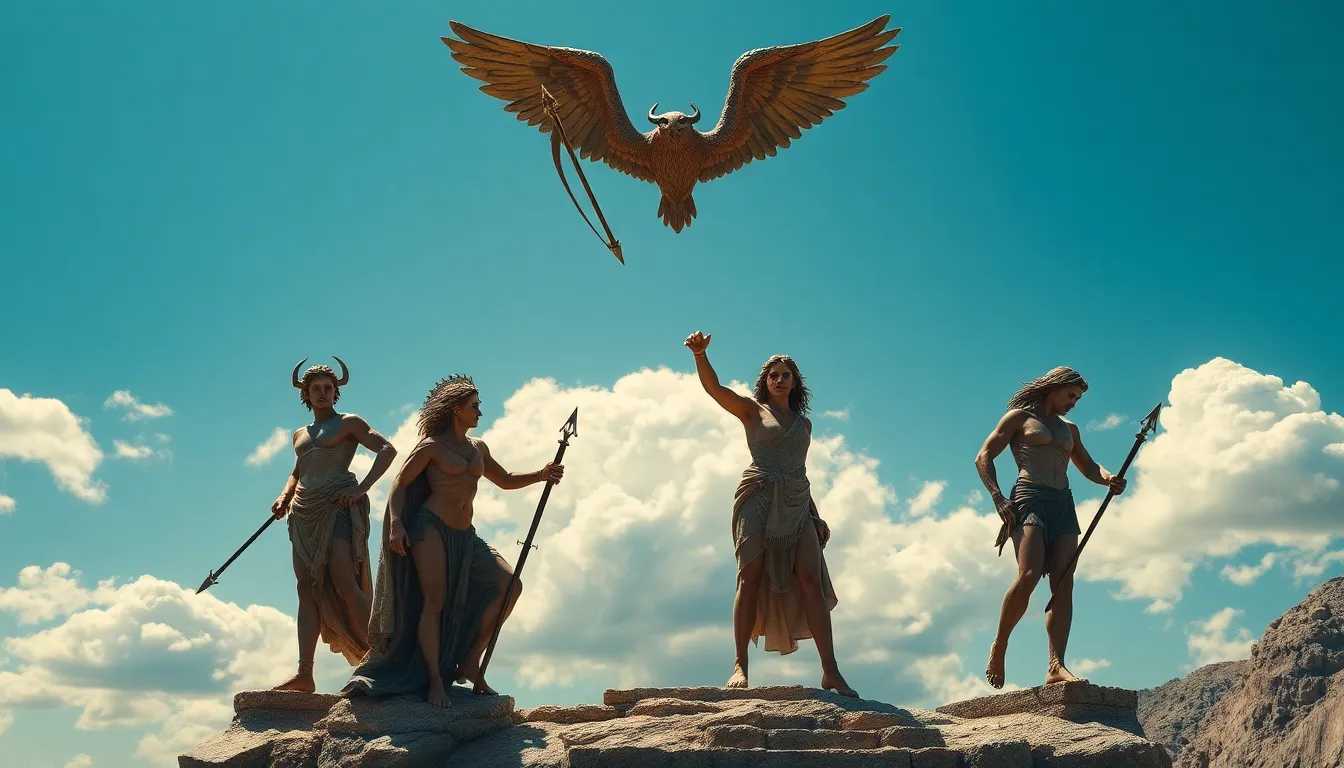
The Trials of the Furies: Vengeance and Justice in Greek Mythology
I. Introduction
The Furies, known as the Erinyes in ancient Greek mythology, are complex figures embodying the themes of vengeance and justice. These formidable goddesses are often depicted as avengers of crimes, especially those related to familial betrayal and moral transgressions. Their presence in myth reflects the ancient Greeks’ values regarding justice and retribution, illustrating the cultural significance of these themes in their society.
This article aims to explore the dual roles of the Furies as both agents of vengeance and enforcers of justice. By examining their origins, key myths, and the philosophical implications of their actions, we can gain a deeper understanding of their importance in Greek mythology and their lasting impact on literature and culture.
II. Origins of the Furies
A. Birth and lineage of the Furies (Erinyes)
The origins of the Furies are shrouded in myth, with various accounts detailing their birth. One prevalent myth states that they were born from the blood of Uranus when he was castrated by his son Cronus. This act of violence gave rise to several entities, including the Furies, who emerged as personifications of vengeance.

B. Their role as personifications of vengeance
The Furies are primarily known as the personifications of vengeance, particularly against those who commit grave offenses such as murder, perjury, and familial betrayal. Their relentless pursuit of wrongdoers serves as a reminder of the consequences of immoral actions, emphasizing the need for accountability in society.
C. Connection to the underworld and the concept of fate
As agents of vengeance, the Furies are closely associated with the underworld. They have the power to drag the guilty into the realm of the dead, where they face eternal punishment. This connection highlights the Greek belief in fate and the inescapable nature of one’s actions, reinforcing the idea that justice must be served, regardless of the circumstances.
III. The Role of the Furies in Justice
A. The Furies as enforcers of moral order
The Furies embody the principles of moral order, serving as enforcers of justice within the universe. They are often depicted as relentless and fearsome, ensuring that the scales of justice are balanced. Their role in mythology underscores the belief that moral transgressions must be addressed to maintain harmony.
B. Examples of their involvement in mythological trials
- The Trial of Orestes: One of the most famous examples of the Furies’ involvement in justice is the trial of Orestes, who killed his mother, Clytemnestra, in revenge for her murder of his father, Agamemnon.
- The Pursuit of Lycurgus: After Lycurgus insulted and attacked the cult of Dionysus, the Furies pursued him relentlessly, demonstrating their role as protectors of divine order.
- The Punishment of Athamas: When Athamas killed his wife and children in a fit of madness, the Furies ensured he faced severe consequences for his actions.
C. The balance between vengeance and justice
The Furies illustrate the delicate balance between vengeance and justice. While they are driven by a desire for retribution, their actions also serve to uphold moral order. This duality raises essential questions about the nature of justice and whether vengeance can ever lead to true resolution.
IV. Key Myths Involving the Furies
A. The case of Orestes and the trial for matricide
The trial of Orestes is perhaps the most significant myth involving the Furies. After avenging his father’s death by killing his mother, Orestes is pursued by the Furies, who represent the moral outrage of his act. The ensuing trial, held in Athens, raises profound questions about justice, guilt, and the nature of vengeance. The Furies, as prosecuting deities, argue for Orestes’ punishment, while Athena ultimately casts the deciding vote, leading to his acquittal.
B. The Furies’ pursuit of wrongdoers in various myths
Throughout Greek mythology, the Furies are depicted as relentless pursuers of those who commit heinous acts. They are often invoked in tales of betrayal and murder, serving as a constant reminder of the consequences of one’s actions. Their pursuit is not merely about punishment; it reflects a deeper moral imperative to restore balance and order to the universe.
C. The transformation of the Furies into the Eumenides
In a significant narrative shift, the Furies undergo a transformation into the Eumenides, or “the kindly ones,” after the trial of Orestes. This change signifies the reconciliation of vengeance with justice, as the Furies embrace a more benevolent role in society. They become protectors of the city and promoters of justice, demonstrating that even vengeful spirits can evolve and contribute positively to the moral order.
V. The Furies and the Concept of Retributive Justice
A. The philosophical implications of their actions
The actions of the Furies raise important philosophical questions regarding the nature of justice. Are they justified in their relentless pursuit of vengeance? Do their actions contribute to or hinder the overall moral fabric of society? These questions invite deeper contemplation about the complexities of human behavior and the consequences of our actions.
B. The moral dilemmas presented by their pursuit of vengeance
The Furies present moral dilemmas that challenge our understanding of justice. Their pursuit of vengeance often leads to cycles of violence and retribution, suggesting that the desire for revenge may not always lead to true justice. This raises critical questions about the effectiveness of retributive justice in addressing wrongdoings.
C. Comparison with modern interpretations of justice
In contemporary society, the themes embodied by the Furies resonate with ongoing debates about justice, punishment, and rehabilitation. Modern legal systems often grapple with the balance between punitive measures and restorative justice, echoing the tensions present in the myths of the Furies.
VI. The Furies in Literature and Art
A. Depictions in ancient Greek tragedies (e.g., Aeschylus’ “Oresteia”)
The Furies are prominently featured in ancient Greek tragedies, most notably in Aeschylus’ “Oresteia.” In this trilogy, they play a crucial role in the themes of justice and vengeance, illustrating the complexities of human emotions and moral dilemmas. Their portrayal in these works emphasizes their significance in Greek culture as embodiments of both fear and reverence.
B. Influence on later literature and art
The Furies have had a lasting influence on literature and art throughout the centuries. Their image has been adapted and reinterpreted in various cultural contexts, symbolizing the timeless themes of revenge, justice, and the moral complexities of human nature. From the works of Roman playwrights to modern adaptations in films and novels, the Furies continue to captivate audiences with their duality.
C. The Furies as symbols in contemporary culture
In contemporary culture, the Furies have emerged as powerful symbols representing female rage, justice, and the quest for balance in a world filled with moral ambiguity. They have been referenced in various forms of media, including literature, film, and art, often serving as metaphors for the struggles against oppression and the fight for justice.
VII. The Furies and Gender Dynamics
A. Representation of female power and rage
The Furies are often interpreted as symbols of female power and rage. Their fierce nature and relentless pursuit of justice challenge traditional gender roles, presenting a complex portrayal of women as both avengers and protectors. This representation invites discussions about the strength and agency of women in mythology and society.
B. The societal implications of the Furies’ actions
The actions of the Furies reflect societal views on justice and morality, particularly in relation to women’s roles. Their pursuit of vengeance can be seen as a critique of patriarchal structures that often silence women’s voices and experiences. By embodying the consequences of wrongdoing, the Furies highlight the need for acknowledgment and accountability in both myth and reality.
C. Feminist interpretations of their role in myth
Feminist interpretations of the Furies emphasize their significance as figures of empowerment. Rather than merely being agents of vengeance, they can be viewed as symbols of women’s rage against injustice and oppression. This perspective invites a reevaluation of their role in mythology, showcasing their potential as catalysts for change and advocates for justice.
<h