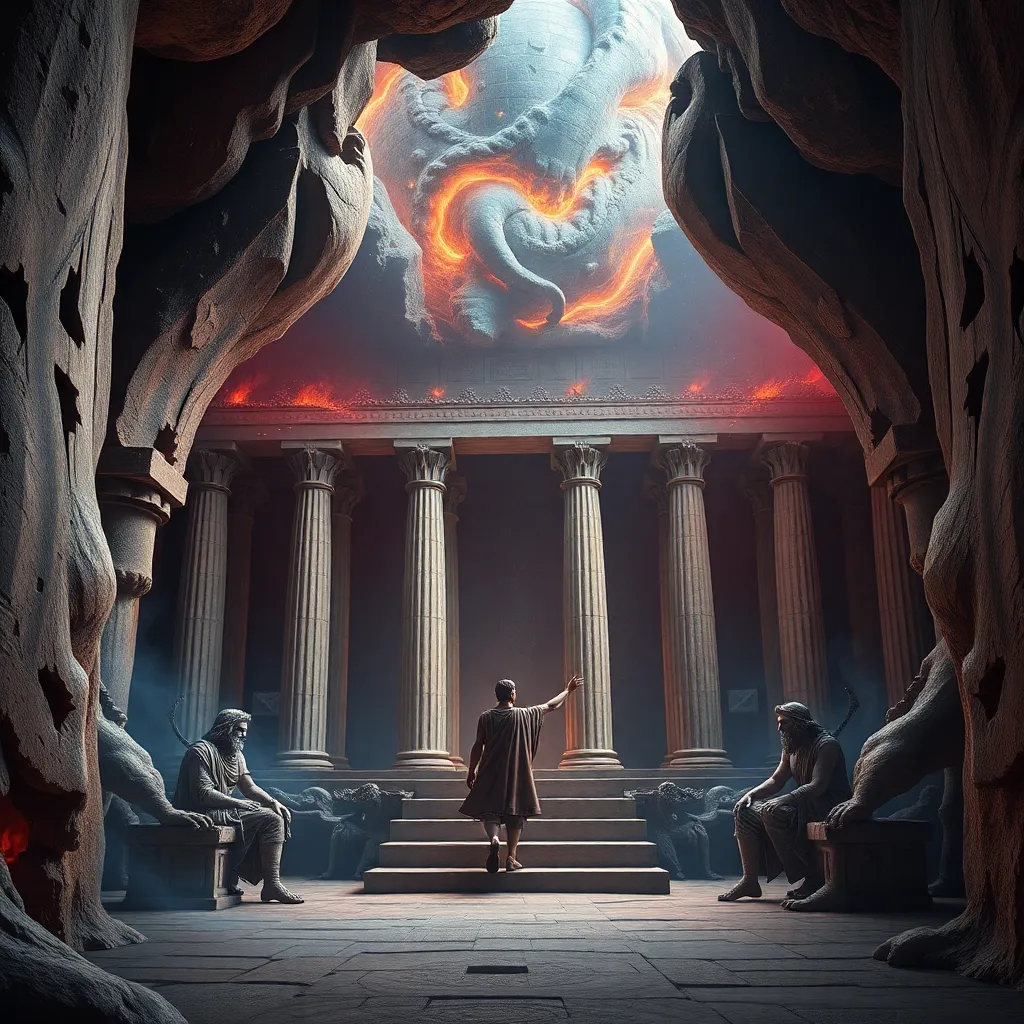
The Underworld’s Influence on Ancient Greek Rhetoric and Philosophy
I. Introduction
The Underworld, or Hades, holds a significant place in ancient Greek culture, representing not only the realm of the dead but also a space of moral and ethical contemplation. In ancient Greece, rhetoric and philosophy flourished, serving as key means of communication and intellectual exploration. The interplay between these disciplines and the concept of the Underworld is profound, influencing how ideas were expressed and understood.
This article explores how the concept of the Underworld shaped rhetorical techniques and philosophical thought in ancient Greek society, revealing the ways in which mythological narratives informed intellectual discourse.
II. The Mythological Context of the Underworld
The Underworld in Greek mythology is a complex realm where souls reside after death. It is not merely a place of darkness but a multifaceted environment governed by various deities and spirits. The Underworld is often depicted as being divided into different regions, such as the Elysian Fields for the virtuous and Tartarus for the wicked.
Key figures associated with the Underworld include:
- Hades: The god of the Underworld, representing the finality of death.
- Persephone: The queen of the Underworld, symbolizing the cycle of life and death.
- Charon: The ferryman of the dead, who transports souls across the river Styx.
Moreover, the Underworld serves as a potent metaphor for moral and ethical dilemmas, representing the struggles between good and evil, justice and injustice, as well as the consequences of human actions.
III. The Role of Death and the Afterlife in Rhetoric
Death, as a universal experience, has long been utilized as a rhetorical device to evoke emotions and persuade audiences. In ancient Greece, orators often employed themes of mortality to deepen their messages and engage listeners more profoundly.
One prominent form of rhetoric centered around death is eulogies and funerary oratory, where speakers honored the deceased by reflecting on their lives and virtues. Such speeches served not only to commemorate the dead but also to reinforce community values and beliefs.
Additionally, narratives surrounding the Underworld wielded persuasive power, as they provided a framework for discussing ethical behavior and the consequences of one’s actions. These stories illustrated the potential fate awaiting individuals based on their earthly conduct, compelling audiences to reflect on their own lives.
IV. Philosophical Perspectives on the Soul and Afterlife
Philosophers in ancient Greece grappled with the implications of the Underworld in their works, examining the nature of the soul and the afterlife. Notable texts, such as Plato’s “Phaedo” and “Republic,” delve into these themes, exploring the relationship between the soul, ethics, and rhetoric.
In “Phaedo,” Plato presents a dialogue on the immortality of the soul and the moral responsibilities of individuals, suggesting that the pursuit of truth and virtue aligns with a higher understanding of existence beyond death. Similarly, the concept of the soul plays a crucial role in shaping discussions on rhetoric and ethics, as it raises questions about the impact of persuasive speech on the individual’s moral standing.
The Underworld also influenced ideas of justice and morality, with philosophers contemplating the implications of an afterlife in which virtuous individuals would be rewarded and wrongdoers punished, thereby reinforcing ethical behavior in society.
V. The Underworld as a Source of Inspiration for Rhetorical Strategies
The symbolism of the Underworld has served as a rich source of inspiration for rhetorical strategies throughout ancient Greek discourse. Orators and philosophers often utilized Underworld imagery to create compelling arguments and evoke emotional responses.
Allegory and metaphor rooted in Underworld themes allowed speakers to convey complex ideas succinctly. For instance, the journey through the Underworld could be used as a metaphor for personal growth and transformation, illustrating the trials one must endure to achieve enlightenment.
Case studies of prominent figures include:
- Socrates: His discussions about the soul and the afterlife in “Apology” and “Phaedo” emphasized the importance of living a virtuous life.
- Demosthenes: Utilized themes of death and the Underworld in his speeches to evoke nationalistic fervor and moral duty.
VI. Critiques of Rhetoric Linked to Underworld Narratives
Despite the powerful use of rhetoric associated with the Underworld, there are critiques rooted in the ethical implications of persuasive speech. Socratic skepticism questioned the validity of rhetoric itself, suggesting that it could be manipulated to deceive rather than reveal truth.
The fear of manipulation linked to Underworld themes also led to censorship and concerns about the ethical responsibilities of orators. The tension between rhetoric as a tool for truth versus deception remains a critical discourse in the context of the Underworld’s narratives.
VII. The Legacy of the Underworld in Later Philosophical Thought
The influence of the Underworld extended beyond ancient Greece, shaping Roman rhetoric and philosophy. Thinkers such as Cicero drew upon Greek concepts, intertwining ideas of the afterlife and morality in their works.
During the Renaissance, the Underworld’s themes saw a revival, as scholars and artists explored the complexities of human existence and the implications of death. The Underworld’s impact on contemporary thought is evident in modern discussions surrounding ethics, morality, and the human condition.
Ongoing relevance can be observed in various disciplines, where the interplay between mythological elements and intellectual discourse continues to inspire.
VIII. Conclusion
In summary, the Underworld’s influence on ancient Greek rhetoric and philosophy is profound, shaping how ideas were communicated and understood. The exploration of death, the afterlife, and moral dilemmas enriched rhetorical techniques and philosophical inquiry.
Reflecting on the enduring significance of the Underworld reveals a landscape where myth and intellect intertwine, illustrating the complexities of human thought and expression. The legacy of these mythological elements continues to resonate within contemporary discussions, highlighting the timeless nature of these themes in shaping our understanding of rhetoric and philosophy.